
Displaying items by tag: theatre
Eos Turns Ancient Anguish Electric in a Blazing Trojan Women

I’m going to start with a bit of backstory. In high school we all read (more or less voluntarily) The Iliad, Homer’s poetic exploration of a war that occurred during the Bronze Age yet continues to resonate with twenty-first century significance. Homer focuses (naturally!) on the guys: heroic Greek Achilles and his lover Patroclus; Hector, prince and hero of Troy; Greek King Menelaus vs. Paris, Prince of Troy. The women are pretty much either pawns or plunder. The Iliad begins with Hector’s baby bro Paris swiping Helen, wife of Menelaus. Menelaus and Paris duel, intending Helen to be the prize, but when Paris is defeated, Aphrodite delivers him to Helen’s bed before Menelaus has a chance to kill him – a good example of the ambivalent outcomes when the gods and goddesses mix it up with mortals. THE TROJAN WOMEN actually begins with an introduction by Poseidon (Brian Weddington), god of the sea, and Rachel Sledd as Athena, goddess of war.
THE TROJAN WOMEN analyzes the costs of war through the trauma and grief of the Trojan women after their city has been sacked, their husbands killed, and their remaining families taken away as slaves. It’s set in a present-day hospital maternity ward that’s serving as confinement for troublesome females. The Chorus (Morgan Lavenstein), that hallmark of ancient Greek drama who provides insight into events both on- and offstage, appears as a woman vastly pregnant and chained to the bed. She’s not best pleased at any of this, and no more tickled about rooming with Hecuba (Ashway Lawver), queen of vanquished Troy and vehemently unreconciled to its overthrow.
Ben Page is Talthybius, a Greek herald who pops in and out with news bulletins, each more hideous than the last. His is the task to reveal to the women their destinies: Hecuba will be given to the Greek king Odysseus, the widowed princess Andromache (Jazmine Mazique) is to be the concubine of Achilles’ son, and Cassandra (Liliana Mastroianni) is destined to become the conquering king Agamemnon’s doxy. Cassandra is clairvoyant, which one might assume to be an asset, but her mother has always dismissed her revelations as hysterical attention-seeking, especially as in such grievous times the future may not be something you really want to hear about. Andromache, Princess of Troy, has just borne a son to her ex-husband ex-Prince Hector, and Talthybius must also break the news that her baby must die, as the Greeks fear he will grow up to avenge his father Hector. And Helen (Morgan Burkey), whose beauty launched a thousand playwrights, ends up back with her husband Menelaus (Marcus Castillo). There’s lots of babies around – we’re in a maternity ward, remember? – and babies are a natural outcome of the unbridled rape that is ubiquitous in wartime; in fact, it appears that the primary position of women in conquered Troy is prone. Plus, ça change, plus c'est la même chose.
OK, are you more or less caught up on characters and setting? cos I need to tell you about Eos Theatre Company. Their stated mission is ‘to shine light into the darkness of the human condition and to amplify women’s voices and stories’, and they’ve chosen THE TROJAN WOMEN as their inaugural presentation because it does both brilliantly. The four co-founders of Eos united at the first table read of The Trojan Women in February 2025. That production was not only fabulous but propagative as well: the four decided to remount the show and simultaneously create a brand-new, all-woman company, named EOS in honor of the Greek Goddess of the dawn who flies her chariot across the sky, pulling back the curtain of night to usher in the light of the sun.
Rachel Sledd is a born-and-bred Chicagoan who lived and acted between New York and Los Angeles until 2006, when she returned to her hometown. Ashway Lawver grew up in Los Angeles. Her passion for the art and study of Acting led her to Chicago to attend The School at Steppenwolf and she found in Chicago her true theatrical home. Morgan Lavenstein began acting in Baltimore at the ripe old age of 8. She attended The School at Steppenwolf and Chicago became her forever home. Morgan Burkey is originally from Texas. In 2017 she was accepted into School at Steppenwolf, where she met fellow co-founders Morgan Lavenstein and Ashway Lawver. Amazing, innit, how extraordinary people from far-flung origins are drawn together? Call it destiny, fate, or kismet, in this case it’s providential.
The production team was as superb as the cast. Co-founder Rachel Sledd was Director and Michael Lesko Stage Manager. Shayna Patel’s Set Design portrayed the ambience before the actors took the stage. The story was encompassed by Mason Absher’s Sound; his choices of music interlocked perfectly and toward the end the impassioned sound pulled the storyline together, as did Garrett Bell’s breathtaking lighting effects.
Seeing THE TROJAN WOMEN was thrilling not only for the splendid play itself, but for the chance to witness the emergence of Eos, a feminist company whose development is sure to beguile and invigorate Chicago for years to come.
Running through April 18th at Bramble Arts Loft
RECOMMENDED
This review is proudly shared with our friends at www.TheatreInChicago.com.
Chicago Takes Its Shot: Hamilton’s 2026 Comeback

Nearly a decade after it first upended the American musical, Hamilton returns to Chicago’s CIBC Theatre as part of Broadway In Chicago’s 2026 season, and its cultural voltage hasn’t dimmed one bit. Inspired by Ron Chernow’s book, Alexander Hamilton, Lin‑Manuel Miranda’s genre‑shifting epic — part biography, part political thriller, part hip‑hop opera — still hits with the force of a story determined to be heard. Having seen it in its inaugural year, I can say this revival lands even sharper, richer, and more assured than ever.
Alexander Hamilton didn’t just witness the birth of the United States — he helped engineer its architecture. As a delegate at the Constitutional Convention, he argued fiercely for a unified national government, and though not the primary drafter, he became one of its most influential defenders, authoring the majority of The Federalist Papers to secure the Constitution’s ratification. His imprint only deepened from there: he built the nation’s financial system from the ground up, established the U.S. Treasury, championed a national bank, and laid the groundwork for the country’s credit, industry, and economic identity. In Hamilton, these achievements aren’t treated as dry civics lessons but as the combustible fuel of a man determined to transform a fragile collection of states into a functioning nation — a legacy as complicated as it is foundational. The musical captures not just his ascent, but the way his ideas became the scaffolding of a country still deciding what it wanted to be.
Through songs like “My Shot,” “The Room Where It Happens,” and “Hurricane,” Miranda reframes the Founding Fathers not as marble statues but as flawed, hungry, deeply human figures fighting to define a nation and themselves. What Miranda is ultimately trying to convey — and what this production underscores beautifully — is that America’s story has always been messy, contested, and built by people who rarely saw themselves as the heroes of their own narrative.
Director Thomas Kail’s staging remains a masterclass in kinetic storytelling. The turntable choreography, the razor‑sharp transitions, and the way bodies carve through space all contribute to a sense of history constantly in motion. Under his direction, the show feels both epic and immediate — a revolution unfolding in real time.

l-r-Tyler Fauntleroy as Alexander Hamilton and A.D. Weaver as George Washington in Hamilton at CIBC Theatre. Photo by Joan Marcus.
What continues to astonish about Hamilton is how much storytelling power resides in its deceptively simple visual world. David Korins’ now‑iconic set — all timber, ropes, brickwork, and scaffolding — frames the action like an unfinished nation still under construction. The exposed architecture becomes a living metaphor for the country Hamilton is trying to build, while the revolving stage keeps history literally turning beneath the actors’ feet. Paul Tazewell’s costumes layer silhouettes with subtle modern inflections, allowing the cast to move with the velocity the score demands while still grounding the story in its 18th‑century roots. The palette shifts almost imperceptibly as alliances form and fracture, and the contrast between the Schuyler sisters’ elegance, the soldiers’ grit, and King George’s absurd opulence adds texture to every scene. Together, the set and costumes create a world that feels both historical and urgently contemporary — a perfect visual match for Miranda’s reimagined revolution.
This Chicago cast brings its own intensity. The Chicago engagement of Hamilton boasts a powerhouse company led by Tyler Fauntleroy, who delivers a relentless, razor‑sharp Alexander Hamilton—equal parts tactician, poet, and live wire. His performance feels carved from pure momentum, capturing both Hamilton’s brilliance and his self‑destructive drive. Opposite him, Jimmie “J.J.” Jeter turns in a magnetic, exquisitely controlled Aaron Burr, layering charm, calculation, and simmering envy into a portrayal that peaks beautifully in a soul‑baring “Wait For It” and a show‑stopping “The Room Where It Happens.” Lauren Mariasoosay brings warmth, emotional clarity, and a quiet steel to Eliza Hamilton (through April 12th), while Amanda Simone Lee commands the stage with fierce intelligence and vocal fire as Angelica Schuyler. Lily Soto shifts effortlessly between the wide‑eyed innocence of Peggy Schuyler and the seductive, wounded edge of Maria Reynolds through April 12th, with Nadina Hassan stepping into the roles beginning April 14th. A true force, A.D. Weaver anchors the production with statesmanlike gravitas as George Washington, and Christian Magby all but steals the show with his dual swagger as Lafayette and Jefferson—two performances so distinct they feel like separate universes. Nathan Haydel brings youthful fire and heartbreaking vulnerability to both John Laurens and Philip Hamilton, while Eddie Ortega grounds the ensemble with muscular presence as Hercules Mulligan and James Madison. And rounding it out, Matt Bittner delivers a perfectly petty, wickedly funny King George III, milking every entrance for maximum delight, stealing the moment with a perfectly calibrated blend of comedy and menace in “You’ll Be Back.”.
Musically, the production remains a marvel. The blend of hip‑hop, R&B, traditional musical theatre, and lyrical density still feels revolutionary, and the orchestra at the CIBC gives the score a muscular, propulsive energy. Even familiar numbers feel newly alive in this space. The production is expansive and brimming with moments that land with exhilarating force.
The run at the CIBC Theatre continues through April 26th, giving audiences a generous window to revisit — or finally experience — the show that redefined what Broadway could be.
In a city that knows its way around bold storytelling, Hamilton still stands out. It’s a reminder that history is not a fixed monument but a living argument — and that the voices shaping it are far more diverse, complicated, and compelling than the textbooks ever let on. Whether you’re seeing it for the first time or the fifth, this production makes the revolution feel brand new.
Highly recommended.
For tickets and/or more show information, click here.
This review is proudly shared with our friends at www.TheatreInChicago.com.
An Explosive, Heart‑Pounding Million Dollar Quartet at Paramount’s Stolp Island Theatre

Some nights in the theatre create a hum with the kind of energy you can feel in your chest - nights when the performers aren’t merely revisiting history but reliving it, reigniting it, and passing that fire straight into the audience’s hands. That’s the voltage running through Stolp Island Theatre’s exhilarating production of Million Dollar Quartet, staged with remarkable precision, pulse, and musical instinct by director Jim Corti.
Set inside the intimate jewel‑box space perched along the Fox River, the production transforms Stolp Island Theatre into a full‑blown time machine - Sun Records beautifully simulated and reborn in the heart of Aurora. The moment you step inside, you’re whisked straight to 706 Union Avenue in Memphis. Even before the show begins, the lobby sets the tone: a 1950s soda‑fountain concession stand invites you to grab a drink, a gleaming vintage motorcycle begs for a photo op, and the walls are lined with memorabilia that feels lovingly plucked from rock ’n’ roll history. Wander a bit further and you’ll find yourself inside a beautifully crafted reproduction of Sam Phillips’ own small office - warm, worn‑in, and full of history you can actually touch and walk through.
Then, with a sudden shift, the doors open and you find yourself standing inside a true-to-size replica of the original Sun recording studio, set up as a theater in the round.
This small but elegant one‑of‑a‑kind environment where Elvis Presley, Johnny Cash, Carl Perkins, and Jerry Lee Lewis aren’t just characters on a stage, but living, breathing artists hanging out, cracking jokes, and making music mere feet away. I’ve seen many great productions of Million Dollar Quartet in beautifully designed houses, but this is the first time where I actually felt the breath of Elvis on my neck as he entered the stage or the sweaty frenetic energy of Jerry Lee Lewis brushing my hand with every single entrance to the stage which made the show very exciting as an audience member.

Madison Palmer and Corey McKinney in Paramount's Million Dollar Quartet at Stolp Island Theatre.
Paramount’s restaging is as fun as it is brilliant. The audience isn’t simply watching a musical; they’re dropped directly into the legendary jam session of December 4, 1956, when Elvis Presley, Johnny Cash, Jerry Lee Lewis, and Carl Perkins unexpectedly found themselves sharing the same room for one unforgettable night. What begins as a casual drop‑in quickly erupts into a spontaneous collision of talent, ego, and raw creative electricity - the kind of alchemy that could only ignite once, and only inside a cramped Memphis studio run by a visionary who believed in these young artists long before the rest of the world caught on.
Through a propulsive blend of music, sharp‑edged banter, and simmering backstage tensions, the show digs into the crossroads each man finds himself standing at - the tug‑of‑war between loyalty and ambition, the pressure of sudden fame, and the shifting identities of artists still discovering who they are and who they might become. What emerges is not just a snapshot of a legendary night, but a portrait of a pivotal cultural flashpoint, a moment when rock ’n’ roll was still being forged in real time and four rising stars found themselves sharing the same room, the same microphones, and the same uncertain horizon.
Sam Phillips may have discovered these artists and shaped them into the icons they’re becoming, but the question hanging in the air is whether loyalty to a small, scrappy label like Sun Records can still serve them - or whether they’ve simply outgrown it, destined for the bigger machines of Columbia and RCA. The show drops us right into that critical juncture, that uncomfortable, high‑stakes conversation where ambition, gratitude, and survival all collide.
It’s a charged moment in the story, and the production meets it with a cast more than capable of carrying that weight.
And that weight is carried first by Garrett Forrestal who doesn’t just play Jerry Lee Lewis - he unleashes him. From the instant his fingers hit the keys, he’s a live wire: mischievous, magnetic, and gloriously unhinged in all the right ways. His piano work becomes its own spectacle, and his razor‑sharp comedic instincts make him the spark plug that keeps the entire night crackling.

Garrett Forrestal in MDQ at Stolp Island Theatre.
Corey McKinney follows with a beautifully layered Elvis - yes, the swagger is spot‑on and the voice is uncanny, but it’s the vulnerability beneath the rhinestone shine that makes his execution unforgettable. He captures a young King at a turning point: confident yet conflicted trying to make the best decision for his career while remaining loyal to the man who gave him his first break.
Brian Grey, performing as Johnny Cash the evening I attended, offers a deep, velvety counterweight to the surrounding chaos - resonant, restrained, and quietly commanding. He nails Cash’s signature rolling, two‑step pulse. The emotional depth of Grey’s portrayal of Cash is really felt by the audience as his eyes blaze with the same fierce righteous honesty during his dialogue. Grey has a tremendous amount of gravitas and the miraculous, unbelievably low notes he hits while singing “Folsom Prison Blues” make the crowd go wild. Grey is hands down one of the best MDQ cast Johnny Cash’s I’ve ever seen.
Rounding out the rock ’n’ roll trailblazers is Matt McClure, who gives Carl Perkins the spotlight he’s long overdue. His crisp, fiery guitar work pairs with a performance full of grit and verve, playing Perkins with a chip on his shoulder and a fire in his gut. McClure’s guitar work is strikingly assured, each riff delivered with a clarity and confidence that elevates every moment he’s onstage.
Madison Palmer as Elvis’s girlfriend, Dyanne - a confident vocalist in her own right - brings it big time. Her sultry, simmering take on “Fever” tantalizes the audience and brings all the sexy female energy missing from this quartet of machismo! Palmer is a delight; she has a great vocal range and panache that this production’s lead female singing role requires. It is implied by Elvis that her character is talented enough to record with these icons and that she, too, might be a voice ready to burst into the spotlight.
Jake Saleh adds humor, rhythm, and charm as Brother Jay, his tight, expressive bass lines and playful physicality keeping the momentum buoyant throughout. Robert Brandon matches that vitality as W. S. ‘Fluke’ Holland, his grounded, stylish percussion giving the music shape and elevating the ensemble’s chemistry.
The cast and band deliver musicianship of exceptional caliber, playing with such precision, passion, and force that the entire production feels supercharged. They really play their hearts out.
Connor Green isn’t part of the musical lineup, yet his portrayal of Sam Phillips binds the entire production together - warm, gritty, and quietly authoritative. We can’t help but appreciate the situation he’s in. Phillips is the man who believed in these boys before the world did, radiating both pride and heartbreak as he watches his protégés outgrow the nest he built for them.
Having experienced Million Dollar Quartet in a range of productions across the years, I can say this one stands out as the most fully realized and emotionally resonant. The intimacy of the staging, the sheer talent of the cast, the way the studio set becomes a living, breathing character in its own right, and the meticulous attention to period detail all combine to create something rare.
The Stolp Island Theatre’s intimate 98‑seat layout feels tailor‑made for this show - the band is practically within arm’s reach, the sound warm and immediate, and the closeness so sharp it’s as if the audience is eavesdropping on history in real time. The design team leans fully into the Sun Records aesthetic, all wood tones, warmth, and lived‑in detail, creating a space that looks and feels less like a set and more like a working Memphis studio caught in the middle of something extraordinary.
This Million Dollar Quartet shines even brighter thanks to a top‑tier creative team working in perfect sync. Directors Jim Corti and Creg Sclavi steer the production with a confident mix of musical precision and character‑forward storytelling, shaping an evening that feels both tightly crafted and effortlessly alive. Kory Danielson’s musical direction fuels the show with irresistible drive and authenticity, while Jeffrey D. Kmiec delivers a Sun Records set that’s so textured and atmospheric it practically hums with history. Matt Guthier’s era‑sharp costumes complete the world with style and specificity. And Garrett Forrestal, also working as Associate Music Director, adds a final layer of polish that keeps the ensemble sounding crisp, unified, and thrilling from start to finish.
Million Dollar Quartet at Stolp Island Theatre is a high‑octane celebration of rock ’n’ roll history, ignited by powerhouse performances and a setlist packed with classics like “Blue Suede Shoes,” “Great Balls of Fire,” “Hound Dog,” “Long Tall Sally,” and a haunting rendition of “Ring of Fire.” The show captures the thrill, spontaneity, and sheer musical joy of that legendary night, and brings the energy of 1950s rock ’n’ roll roaring back to life.
Part concert, part play, and all adrenaline - Million Dollar Quartet turns into one heck of a ride. This production is highly recommended and runs through March 31st, offering a chance to experience this electrifying slice of American music history.
For tickets and/or more show information, click here.
This review is proudly shared with our friends at www.TheatreInChicago.com.
About Face’s Modern Gentleman Adds a Valuable Piece to a Fascinating Puzzle

There are thousands of stories you’d love to see brought to the stage. Stories that slip into the lives of people who walk through the world either unseen or are barely considered by those possessing more standard existences. People who, because of the way they look or talk or are intrinsically wired to move through life find themselves on the periphery. Or who mask their true selves by pretending to be something they’re not. With all the same desires, hopes and dreams of a common human being, something about them hinders them from freely striving for type of self-actualization we all crave.
How they see themselves, relate to others and fulfill their aspirations can produce illuminating and often engrossing stories about who and what we, as a species, inherently are. They’re in the family of stories queer focused About Face Theatre has been telling boldly and honestly since 1995. And it’s current production by playwright Preston May Allen, Modern Gentleman, fits snugly in the theater company’s oeuvre of truth.
By stepping into and exploring the life of Adam, a trans man living in present day New York, About Face again provides a platform to enlighten through alternative storytelling. Uniquely structured, and under Landree Fleming’s novel direction, Modern Gentleman presents ideas, beliefs and circumstances that provoke serious and stimulating contemplation. Despite all the things it either suggests or leaves a mystery, it’s the common threads of life that stand out most distinctly.
Passion, drama and rewardingly precocious humor are the trinity that pervade this profile of a person trying to live their most complete life in the gender they feel most comfortable.
Its passion that opens the play as Adam (Alec Phan) and his girlfriend Lily (Kaylah Marie Crosby) tumble through the front door of Adam’s apartment tearing at each other’s clothes in their rush to get busy between the sheets. A young articulate couple, they’ve been together for five years and have that satisfyingly acclimated aura of a happily nested pair. The only odd note is that after a certain point, they seem to be a little awkward about undressing in front of one another.
It isn’t long before the barely visible specter of foreboding that steals over them gets pulled from the shadows. Sometime since they’ve been together, Adam’s found the courage to confess his desire to transition from being a woman and become male. When they originally met, they were two women, lesbians whose relationship led to love. It may have been a startling revelation for Lilly. But that depends on the amount of candor that defined their union. Others in her position would have left immediately. Lilly stayed, but two years into a regimen of testosterone treatments and the transformation of her once girlfriend’s physical appearance, and Lilly is experiencing a change of heart. She eventually tells Adam she can’t go do it and leaves.
Her departure though doesn’t prove final. She keeps resurfacing, coming back to the apartment to house sit and care for Adam’s diabetic cat when he needs to travel for work. Stopping by repeatedly to clarify her position and probe his. Through their back and forth, we get an enlightening, indeed an enlivened picture of the complexity and far-reaching ripple effects a single very personal decision can produce.
Because they’re both so expressive, so fluent in disclosing their innermost feelings, we learn the rupture isn’t at heart due to superficialities. It seems to center on personal perception of self and how they both want to experience intimacy beyond sex.
Because he has allies, Adam enjoys the benefit of other insights. His friend Samuel (Omer Abbas Salem), whose “gayese” is superb and whose piquant wit is lined with razors, has tons of excellent advice. Adam’s sister Natalie (Ashlyn Lozano) is equally supportive and just savvy as Sam. We never know why neither Samuel or Natalie seem to care for Lily who, despite the amount of time she has on stage and the good sense she consistently demonstrates, seems bereft of boosters in her corner.
A woman Adam meets at a family social event and eventually hooks up with, Alycia, played with wonderfully brash assurance by Emma Fulmer, helps paint a bracing image of what dating looks like 2 ½ decades into the 21st century. Through her frankness, she lets Adam get a clearer picture of how a trans man who hasn’t had any below the belt alterations can fit into today’s sexual cosmos.
Milo Bue’s subdued polished set offers an unobtrusive and pleasing backdrop to this edifying drama of the heart. Ethan Korvne’s sound design and original music bring unexpected texture to Adam’s story and shows how well composed sound elements can complement dramatic theater. And thanks to Catherine Miller’s cosmopolitan approach to casting, we gain a promising view into the possible.
Language that sometimes strays toward the ponderous, and occasionally less than fluid scene transitions, prove only mildly distracting. They don’t lessen the suspense of how Adam will come to fully accept himself as the man he now is rather than some fantasized ideal. Nor do they leave us less curious of about how that kind of epiphany will impact his relationship with Lily.
What Modern Gentleman does most gratifyingly is shed thoughtful and intelligently humane light on one of the unseen and unheralded in our midst to give us a fuller understanding of ourselves.
Modern Gentleman
Through April 18, 2026
About Face Theatre
Venue: Raven Theater
6157 N. Clark Street
Chicago, IL 60660
For more information and tickets: https://aboutfacetheatre.com
This review is proudly shared with our friends at www.TheatreInChicago.com.
Off-Key and Missing the Mark: Off Nights at the Sometimes Cafe at Bramble Arts Loft

If all the world’s a stage and we are all merely players, then we must be prepared when we are thrust into the spotlight. Not everyone will be ready. Some of us might freeze or forget our lines or simply wave the spotlight on, forgoing the opportunity to perform, content with playing in the shadows or the wings. Others, however, crave the attention and demand to be center stage, presumably because they have something to say. Whether or not you signed up to be in the play or part of the production, it’s essential to be prepared, to know what you would say or do when given a stage. This past weekend, I witnessed just such an opportunity during a performance of Off-Nights at the Sometimes Café. The stage was set, the players cast, and an attentive audience seated. The trouble was, when the spotlight was on, nothing was said.
Off-Nights at the Sometimes Café is billed as a campy parody of a noir mystery, following a cafe pianist in lieu of a detective. As the pianist/narrator plays his way through the show, he guides the audience through the tangled web of attraction, seduction, and general silliness that occurs when a bunch of attractive queer people end up in the same place.
On its surface, Dave Walther’s Off-Nights at the Sometimes Café aims to be a delightful, poignantly unserious celebration of queer joy and desire, and a heartwarming portrayal of how to find a chosen family— warts and all. But that message, along with the representation it aims to spotlight, is completely lost in a story lacking in formula, pace, or purpose. There is no particular plot with a beginning, middle, and an end. There’s no catalytic event or climax. It’s more of a drawn-out setting of a café scene, focusing on the introduction of six characters that takes over one hour of the play’s seventy-five-minute run time to fully explain. There is no protagonist – or spoken scenes for that matter -- save for the curmudgeonly monotonous narrator who tells the story in the same sad minor keys the musical numbers are played in. The only time the characters speak is through song. While the players have exceptional voices, the choice of opera as a medium is an interesting one. The operatic numbers all focus on love (both absent and unrequited), but they don’t particularly move the story forward or really accentuate or explain the characters’ motivations or sentiments. Save for a few witty one-liners and repetitive drag numbers, there isn’t much depth or substance to this story, so it begs the question: Why was this put on?
Off-Nights at the Sometimes Café is simply doing too much for a message of love, acceptance, and community to shine through. At least that is what I took away from the production. It’s neither an homage to film noir nor a parody. It’s lacking in elements such as a femme fatale, lover’s quarrels, a whodunnit with high-contrast lighting, nonsensical voice narration, hyperbolic metaphors, or, said succinctly, a storyline, something nearly every film noir/parody possesses. The same goes for the opera homage and lack thereof. Key operatic elements are also lacking, such as libretto (text/story), aria (emotional solo), a recitative (speech-like narrative singing), and most importantly, the theatre and spectacle that opera is known for. None of that is found in this play. To be fair, perhaps that was the whole point, and it simply missed me as quickly as the 70-degree day in Chicago. If you squinted, you could see where Off-Nights was trying to go. The problem was in the execution and pace of the story. It was simply doing too much and not enough at the same time. Director Clare DiVizio’s introduction to the play provided more grounding and heart than the entirety of the run of the show, the reminder to all that queer and trans rights matter, now more than ever in today’s volatile and violent world. Off-Nights lingers so heavily in the descriptions of characters and their identification that we miss the ‘why?’ Why are we here? Why should we care about these characters? What do you want the audience to take away from this production, outside of a love story that references the last great love was when dinosaurs were drinking beers? Off-Nights, unfortunately, misses their mark.
When given a spotlight, one must be ready and prepared to step into it with something to say. No matter the medium chosen to convey one’s story, the story still needs to be easy to follow. It should have heart and depth even if it’s told through parody and satire. If the message you wish to impart to your audience is lost in translation, or simply doesn’t exist, was it ready for its moment on the stage? Did the story linger in the shadows too long, or was it simply not ready for the spotlight? With some rewriting, staging choices, and script alignment to any of the formulas the play aims at parodying, Off-Nights at the Sometimes Café could become the queer extravaganza it bills itself as. Until then, the audience is waiting for something great to take the stage and have its moment in the spotlight.
Check out the other 2026 season of events and shows at Bramble Arts Loft and learn more about The Thompson Street Opera Co. and their mission to bring inclusivity to the operatic art form.
National Hellenic Museum's Trial of Odysseus: Hero or Criminal?

King Odysseus returns home to Ithaca after twenty years’ absence: ten years’ fighting the Trojan War (it takes time to build a big enough wooden horse), followed by a ten-year journey during which everything that could go wrong does go wrong: think rush-hour traffic on the Kennedy under construction. When he finally arrives, Odysseus finds yet another complication: in his absence a hundred men have undertaken to lay claim to his throne, actually taking up residence in Odysseus’ palace, scarfing down his harvests, seducing his servants, and harassing his wife.
Penelope has made every effort to discourage the putative suitors, her most recent gambit being a challenge to string Odysseus’ mighty bow, then use it to shoot an arrow through a line of a dozen axe handles. That’s pretty serious and, unsurprisingly, none of the opportunists manages. Everyone is amazed therefore when a stranger (Odysseus disguised as a beggar) nails it. The disappointed contenders aren’t happy about this, and are further aggrieved when the ‘beggar’ throws off his rags, identifies himself, and advises the intruders to hit the road.
Odysseus, legitimately vexed at the situation, answers their disgruntlement with violence and all hundred freeloaders are … well, the proper verb is in question, as it’s unclear whether Odysseus righteously executes or viciously murders them. This is the issue we explore in TRIAL OF ODYSSEUS: is Odysseus a champion, heroically defending his title, his home, and his family? Or is he a villain, goaded by jealous rage into a frenzy of unwonted slaughter?
TRIAL OF ODYSSEUS was … what to call it? to be honest it was not truly theater. TRIAL OF ODYSSEUS was presented as an actual trial, with Antonio M Romanucci and Daisy Ayllón of Romanucci & Blandin LLC prosecuting and Patrick M. Collins and Tinos Diamantatos of King & Spalding LLP arguing for the defense. A panel of four judges (Georgia M Alexakis, Sara L Ellis, Jeffrey G Chrones and Anthony C. Kyrikopoulos) and twelve jurors examined and cross-examined both the witness Phimeus (Leonardo Sfondouris) and Odysseus, played by Christos Vasilopoulos.
The final decision, however, was ours. Each audience member was provided with their choice of two tokens, blue for guilty and white for innocent. At the close of examination these tokens were collected and their count served as the verdict: Odysseus was found Not Guilty., I suspect that those voting Guilty did so from the viewpoint of twenty-first century law. I can’t believe anyone in the Bronze Age, roughly 1200 BCE, would not fully sympathize with Odysseus’ reaction, however grisly.
I’m totally ignorant of judicial matters, and someone better acquainted with legal procedure might have found problems with how the trial was portrayed, but I thought it was as credible as it was entertaining. For one, it certainly reflected the delay encountered in our modern magisterial system, as the event under arbitration occurred more than 3,000 years ago. A real trial for first-degree murder would probably incorporate less humor, but the Court had no difficulty drawing parallels across the three-millennium time difference; many of these comments were quite amusing and were certainly appreciated by the audience.
TRIAL OF ODYSSEUS was instructive, engaging, and just plain fun! The bad news is that it was a single production; there will be no further performances. But keep your eye on the National Hellenic Museum, as they offer regular events and exhibitions.
This review is proudly shared with our friends at www.TheatreInChicago.com.
Reservation Mayhem, One Man, Forty Voices: Mike Newquist Ignites 'Fully Committed' at The Den

Get ready - those phones are about to explode, and Sam is already spinning like a top trying to catch every single one. It’s a full‑blown ring‑storm, and he’s diving into it with the hectic energy of someone who knows the chaos is coming and still can’t outrun it.
A brisk, razor‑funny powder keg of a play, Fully Committed tracks a single frantic day in the life of Sam, the lone reservationist at one of Manhattan’s most elite - and most impossible - restaurant. Becky Mode’s script is a full‑tilt high‑wire act, and Mike Newquist tears across nearly forty characters with the kind of breakneck precision that makes your head spin. As Sam, he’s already a live wire - but then he’s also snapping into entitled celebrities, neurotic assistants, tyrannical chefs, and every flavor of fine‑dining madness that dares to ring his desk. It’s dazzling, anxious, and wildly fun to watch him juggle it all without ever dropping the thread. The comedy snaps because each character is so sharply etched, and Newquist seamlessly shifts among them with the kind of finesse that turns mayhem into art.
At its heart, the nearly 90-minute play gleefully skewers the rituals of status and the agitated, almost feral hunger for exclusivity, exposing just how ridiculous people become when a reservation turns into a badge of power. Sam becomes the unseen fulcrum of that world, and his day unravels from merely hectic to outright surreal as he absorbs tantrums, negotiates impossible demands, and fights to keep a grip on his own sense of worth. Watching Newquist as Sam behind that reservation desk in a constant tinderbox had me instantly aware that I wouldn’t survive two hours in his shoes. His frantic charm and barely contained panic sells the chaos and sparks a whole new respect for the people who actually thrive in that kind of daily combustion.
Fully Committed lands as hard as it does because it’s rooted in real industry absurdity. Mode shaped these characters straight out of real restaurant‑world encounters, giving the show a mix of satirical whirlwind and a bite of truth that feels both sharply recognizable and wickedly real.
Throughout the play, I loved how Sam’s dad kept slipping into the heavy commotion with that gentle, grounding voice - just long enough to let the whole room exhale. Each time he called, Sam’s entire demeanor flipped in an instant; you could watch him go from frazzled to peaceful like someone had hit a reset switch. Those brief check-ins made it clear how a few steady words from a gentle, supportive father (or friend/family member) can cut straight through the noise, offering a tiny pocket of calm even when everything else is burning down around him.
Mike Newquist is pure kinetic joy onstage, delivering a commanding turn in Fully Committed. The Chicago‑based actor and improviser thrives in the city’s storefront trenches, bouncing between sharp‑edged comedy, character chameleon work, and the kind of ensemble disorder where anything can - and usually does - happen. He’s popped up with PrideArts, AstonRep, and The Comrades, tackling everything from contemporary drama to high-velocity comic mayhem. In Fully Committed, it’s his quick‑switch agility that makes him a blast to watch.
Directed by Derek Bertelsen, this Chicago staging arrives with a jolt of fresh energy and real immediacy. Newquist’s performance becomes the engine that drives the whole night, while Bertelsen keeps the momentum razor‑sharp, the pacing tight, and every character shift snapping cleanly into place.
The Den Theatre hosts the run March 13–28, 2026, with performances on Friday and Saturday nights at 7:30 p.m. Tickets for Fully Committed at The Den Theatre are just $26. For tickets and/or any more show information, click here.
Recommended.
This review is proudly shared with our friends at www.TheatreInChicago.com.
Static, Signals, and Surprises: City Lit’s Changing Channels Tunes In

The year is 1952. Television is rapidly gaining popularity over radio, to the delight of some and the disgust of others. Senator Joseph McCarthy has just been re-elected and is accusing hundreds of people of having connections to the Communist Party, provoking a nationwide climate of paranoid hysteria. Thousands of people, particularly in the mass media, are being blacklisted and expelled from their jobs. One would think (hope!) the lessons of this Red Scare might relieve us of government overreach and of accusations due to differing ideologies … sadly, not so much, as attested to by Stephen Colbert.
CHANGING CHANNELS opens in a backstage dressing room at the DuMont Television Network, a dressing room tenanted by Maggie Carlin (Kat Evans) for her popular comedy show. Kat Evans as Maggie Carlin and Orion Lay-Sleeper as her comedic partner Eddie Gilroy are both absolutely terrific. I don’t generally like comedy; a television laugh track is like fingernails on a blackboard to me, but as CHANGING CHANNELS takes place on the set of a comedy TV show, some jokes are inevitable. Happily, they are truly good jokes. We all know the sound of an audience trying to laugh cos they know it’s expected, as opposed to honestly breaking up over a droll line delivered skillfully, and in CHANGING CHANNELS even I was LOL! And later when the script turned serious, Evans and Lay-Sleeper both demonstrated superior range.
Skyler Tipton played Maggie’s husband Peter Bell, a truly stellar spouse, unswerving in his devotion and succor (I love using the word ‘succor’ – it’s like getting away with talking dirty). Andrew Pappas plays the handyman Kenny, a role that might have been a bit part but turns out to be pivotal. It’s not easy to flesh out a character from only a handful of appearances and lines, but Pappas succeeds in making Kenny real, a person whom one might like to have around.
Eddie’s lawyer, misfortunately (albeit appropriately) named Bullets, is played by Johnny Moran. The lawyer arrives bearing tidings of great joy – a breakthrough advance for Maggie and Eddie’s show! Next, however, he has to deliver the caveat: in order to accept the promotion they must sign a document that amounts to a loyalty pledge. Here is the crux around which the story turns: refusal to sign is not so much what anyone wants to do; it’s being expected to sign that rankles.
The set, designed by Joe Larkin, was inspired. The entire show takes place in Maggie’s backstage dressing room, giving the performance a pleasing sense of intimacy – Maggie can make all her many costume changes right onstage behind the big dress/costume rack – it is, after all, her dressing room! The wall is hung with posters showing some of Maggie and Eddie’s performances, and I was delighted to see on the coffee table a vintage copy of True Confessions – brilliant prop, Meg X McGrath! Emily McConnell’s costumes were spot on, totally in sync with the characters and the period, as well as a shining testament to Chicago’s resale shops! Lighting by Liz Cooper and Sound by Petter Wahlbeck combined to form an effective vintage milieu. And the overall smooth production is a testament to Stage Manager Tseela Sokolin-Maimon’s skill.
Why did I like CHANGING CHANNELS so much, given my dislike of comedy theatre? Well, CHANGING CHANNELS isn’t truly a comedy show – the comic repartee is because the characters are comediennes. The play itself, while very funny at times, is actually political commentary, and the raillery serves to lighten and brighten what might otherwise have been a heavy-handed delivery of the message. To my mind this serves to make the message more powerful as well as more accessible.
Edmund Burke said:” The only thing necessary for the triumph of evil is for good men [sic] to do nothing.” Hear hear!
CHANGING CHANNELS plays at City Lit Theatre, 1020 W Bryn Mawr Ave, through April 12
HIGHLY RECOMMENDED!
This review is proudly shared with our friends at www.TheatreInChicago.com.
A Night in Jellicle Heaven: Music Theater Works Delivers a Stunning 'Cats'

Andrew Lloyd Webber’s Cats remains one of musical theatre’s most distinctive creations - a sung‑through, dance‑driven spectacle that swaps traditional plot for atmosphere, character portraits, and pure theatrical immersion. Drawn from T. S. Eliot’s Old Possum’s Book of Practical Cats, the musical unfolds as a moonlit gathering of the Jellicle tribe, each feline stepping forward to claim the spotlight before the climactic “Jellicle Choice,” when one is chosen for rebirth into the Heaviside Layer – a new life. Its unconventional structure, eclectic score, and iconic choreography helped define the mega-musical era, earning Cats major awards and record‑breaking runs in both London and New York. And now it’s here!
To kick off their 2026 season, Music Theater Works brings Cats to the North Theatre in the North Shore Center for the Performing Arts, offering Chicago audiences a fresh trip into the Jellicle universe. It’s the perfect time to pounce on this legendary musical - whether you’re drawn by its nostalgia, its high‑energy movement, or the simple delight of watching a community of cats chase belonging and second chances.
Cats has always been one of my very favorite Andrew Lloyd Webber musicals, and revisiting it reminds me why. Its blend of atmosphere, movement, and character‑driven storytelling creates a world that feels both whimsical and strangely profound – a world that is so easy to get lost in.
What continues to give Cats its staying power is the blend of spectacle and emotional resonance. While much of the evening plays as a parade of emotionally grounded ensemble-anchored numbers - playful, mischievous, or grand - the heart of the piece rests with Grizabella (magnificently played in this production by Ava Lane Stovall), the faded glamour cat whose ballad “Memory” became a global standard. The production’s emphasis on movement, atmosphere, and immersive world‑building over traditional linear storytelling makes Cats both polarizing and unforgettable, and its decades‑long staying power proves just how deeply that approach resonates across generations. Music Theater Works captures that essence beautifully, channeling the show’s dreamlike logic and ritualistic energy in a way that feels both faithful and freshly imagined.
Astutely directed and choreographed by Mandy Modic, Music Theater Works makes inventive use of the North Shore Center’s intimate space, transforming nearly every nook and cranny into part of the Jellicle playground. The result is a production where activity seems to spark from every direction, creating a sense of constant motion that borders on ingenious. From the moment the show begins - after a playful prelude of cat videos on a large TV - the cast emerges in the dark, parading down the aisles with glowing cat‑eye glasses that immediately pull the audience into their world. Throughout the performance, strategically placed perches and platforms scattered around the theater keep the action mere inches away, giving some audience members the rare thrill of being fully surrounded by the Jellicle tribe. Though I’ve seen Cats countless times in both the Chicagoland area and New York, this production may well be the one that connected with me the most.

(Center) Ethan Lupp as “Rum Tum Tugger” and members of the cast of CATS in CATS from Music Theater Works, now playing through March 29 at the North Shore Center for the Performing Arts in Skokie.
Sam Nachison brings a commanding warmth to Old Deuteronomy, balancing authority with compassion and grounding the production with a rich, resonant baritone in his self‑titled number. Stovall, meanwhile, delivers a vocally commanding, show‑stopping “Memory” in Act II - an emotional high point that pierced my heart and gave me chills. But what truly elevates this production is how deep the talent runs throughout the ensemble. Whether it’s the big, full‑company showstoppers, the sly, feline physicality woven into every corner of the stage, or the sheer joy of numbers like “Magical Mister Mistoffelees,” the cast proves endlessly engaging. Group sequences such as “Jellicle Songs for Jellicle Cats” and “Journey to the Heaviside Layer” showcase a company working in complete synchronicity, creating moment after moment that dazzles. The memorable beats are as abundant as the cats roaming the theater, each one adding to a production overflowing with energy, precision, and charm.
Throughout the performance, I found myself drawn to different performers at different moments, captivated by their vocals, their movement, and the sheer feline energy they brought to the stage. The ensemble’s commitment was so complete that no matter where I looked, someone was doing something compelling, clever, or beautifully in character. That sense of constant discovery carried straight into the show’s physical feats - from aerial acrobatics to Morgan Schoenecker’s crisp tap breaks as Jennyanydots and even the unexpected skating sequences led by Danny Spagnuolo as Skimbleshanks - making the production a steady stream of surprises. Add in the constant, playful eye contact from cats prancing through the aisles, and every moment feels enchanting - alive with movement, mischief, and immersive detail.
Nick Johnson’s Munkustrap grounds the entire production with a steady, commanding presence, guiding the ensemble and shaping the rhythm of the evening. He moves through the show with an effortless authority - part narrator, part guardian - setting both the emotional and musical pace while keeping the Jellicle world anchored. In doing so, he opens the door for the production’s standout moments to land with even greater impact - and never far from that spotlight is Emma Jean Eastlund’s Bombalurina, slipping in with charisma and precision alongside the rest of the talented ensemble.

Ava Lane Stovall as “Grizabella” in CATS from Music Theater Works. Phots by Brett Beiner.
Another moment that stayed with me was John Cardone’s moving rendition of “Gus: The Theatre Cat.” As Asparagus, he delivers this bittersweet, nostalgic reflection of an aging performer looking back on the glory days of his career. The ache of the number comes from the gap between who Gus once was and who he has become - an actor with a shabby coat, trembling paws, and memories of a time when he was the “terror to mice.” Cardone leans into that fragility with such sincerity that the song lands as both a tribute and a quiet heartbreak.
And from that intimate moment, the production expands back into the vibrant world of the Jellicles. The cats themselves are incredible - brought to life with remarkable clarity thanks to the production’s outstanding creative team. Much of that magic stems from the meticulous work of hair, wig, and makeup designers Megan E. Pirtle and Melanie Saso, whose transformations give each performer a distinct feline identity, and from the richly textured costumes crafted by kClare McKellaston and wardrobe head Kristen Brinati, which add depth, personality, and visual cohesion to the entire tribe. Together, their contributions shape a world so vivid and fully realized that the characters feel as if they’ve stepped straight out of Eliot’s imagination and into the audience’s laps. Credit belongs to every corner of the creative team, from scenic design to sound to lighting, all working together to shape an atmosphere that feels nothing short of Jellicle heaven. Their combined artistry turns the space into a fully realized world - mystical, inviting, and alive with detail - so the audience is immersed from the moment the first cat appears. Every technical element works in harmony to envelop the audience in this moonlit world - sets that invite exploration, sound that wraps around the room, and lighting that shifts the space from mystical to electric in an instant. The result is a production that manages to be both haunting and joyfully alive, lingering in the imagination long after the final note.
What I appreciated most about this rich and colorful production is how it reflects the moment we’re living in. At a time when the world feels unsteady, we’re each our own special kind of “cat,” carrying unique talents and flaws, and offering up our personal histories - our triumphs and our losses to each other our fellow "cats" - as the curtain of world seems to be falling around us. Yet, in that shared vulnerability, we find the strength to realize that as long as we keep supporting one another, the light never truly goes out.
Purr‑fect, meow‑velous, pawsitively delightful, downright meow‑gical - take your pick! Every one of them fits this production like a cat in a sunbeam.
Music Theatre Works’ Cats is being performed at the North Theatre in the North Shore Center for the Performing Arts through March 29th. For tickets and/or more show information visit https://www.musictheaterworks.com/2026-season/cats/.
Highly Recommended.
This review is proudly shared with our friends at www.TheatreInChicago.com.
TimeLine Theatre Company announces inaugural season at new Uptown home

|
|
|
|
|
IT’S TIME: ABOUT TIMELINE’S NEW HOME
|
|
“A Strange Loop” Lets the Intrusive Thoughts Win at Raven Theatre in partnership with About Face Theatre
17 October 2026 in Theatre in ReviewA musical, but it’s just the voices in your head. Sounds just crazy enough to win the 2020 Pulitzer for…

Announcing Goodman's 22nd New Stages 2026 Festival Line-Up
15 October 2026 in Upcoming TheatreFrom a "Kung Fu rom-com" to a witchy new musical, The Goodman's popular New Stages Festival in its 22nd year continues…

TIMELINE THEATRE’S 100TH PRODUCTION, THE CHICAGO PREMIERE OF LAURA WADE’S HOME, I’M DARLING, DIRECTED BY MECHELLE MOE, SATIRIZES THE SEDUCTIVE FANTASY OF A “SIMPLER PAST,” NOVEMBER 11 - DECEMBER 13
14 October 2026 in Upcoming TheatreTimeLine Theatre’s 30th Anniversary Season at its new home in Uptown rolls merrily along in November with the company’s 100th…

Court Theatre announces America@250 - Now is the Time: Artists Go to Work
14 October 2026 in Theatre BuzzUnder the leadership of Marilyn F. Vitale Artistic Director Avery Willis Hoffman and Executive Director Angel Ysaguirre, Court Theatre proudly…
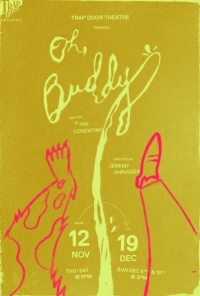
Trap Door Theatre Presents the World Premiere of OH, BUDDY, by Hal Cosentino. Opening November 12th, 2026
14 October 2026 in Upcoming TheatreTrap Door Theatre is thrilled to continue its 33rd season with a Chicago Premiere of Oh, Buddy, written by Hal…

Announcing the Cast of the 49th A CHRISTMAS CAROL
14 October 2026 in Upcoming TheatreTis the season, in spite of today's unseasonable temps, as A Christmas Carol begins rehearsals for The Goodman's 49th annual…

NOVA ENTERTAINMENT CURRENT AND UPCOMING 2026 CIRCA PINTIG UPDATES
14 October 2026 in Now PlayingNova Entertainment is pleased to announce the upcoming performance schedule and updates for CIRCA Pintig, with a visual rebrand and…

Steppenwolf Theatre Announces "ha ha ha ha ha ha ha" January 13 – February 7, 2027
14 October 2026 in Upcoming TheatreThe blurb is: hahahahahahahahahaha hahahahahahaha hihihi hahahahahahaha hoho hahahhahaha hehe hahahahahahahahahaha. Julia Masli's award-winning solo phenomenon ha ha ha ha…

'Sanctuary Stories' Ventures Into Emotional Drama Behind the News on Immigration
13 October 2026 in Theatre in ReviewSanctuary Stories plumbs the line between theater and journalism, and the powerful human dramas both can depict. Funded by a Northwestern…
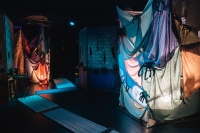
Inside Six Strange Worlds: Exquisite Corpse VI: LULLABIES
13 October 2026 in Theatre in ReviewFor its sixth Halloween season, Rough House Theater Co. has transformed Steppenwolf’s Merle Reskin Garage into a spectacular puppet haunted…
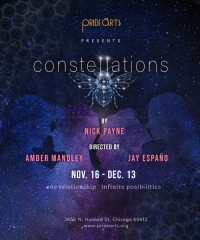
PrideArts announces cast and production teams for Nick Payne's CONSTELLATIONS, performed by alternating same-sex casts, November 13- December 13
12 October 2026 in Upcoming TheatreThursdays – Saturdays at 7:00 pm, Sundays at 3 pm Additional Saturday matinees at 3:00 pm on November 28 and December…
Robert Falls Directs a Sinfully Satisfying Don Giovanni at Lyric Opera of Chicago
11 October 2026 in Theatre in ReviewLet he without sin cast the first stone, Lyric’s “Don Giovanni” seemingly says when they bring up the house lights…

Teatro Vista Productions in collaboration with Audible presents Cafecito & Loops: A Mexodus Listening Tour Headed South Sundays, through November 1st
11 October 2026 in Now PlayingTeatro Vista Productions (TVP), the Midwest's only Latine-led Equity theatre company, in collaboration with Audible, presents Cafecito & Loops: A…
BrightSide’s Addams Family Musical Revives the Wonderfully Weird World of the Addams Clan
10 October 2026 in Theatre in ReviewThey're creepy and they're kooky, Mysterious and spooky, They're altogether ooky, The Addams Family. Yes, ooky. BrightSide Theatre’s production of…
Chicago City Opera Delivers a Rare Operatic Haunting with Der Vampyr
08 October 2026 in Theatre in ReviewWith Halloween creeping closer, there’s something fitting about revisiting one of opera’s earliest flirtations with macabre horror - especially in…

Avalanche Theatre stages the world premiere of They Broke Up by Skyler Tarnas November 6–22, 2026
08 October 2026 in Upcoming TheatreAvalanche Theatre announces the world premiere production of They Broke Up by Chicago playwright Skyler Tarnas, November 6–22, 2026. Opening…

Oil Lamp Theater Announces the cast and creative team for the return of IT'S A WONDERFUL LIFE: A LIVE RADIO PLAY, Nov. 20 - Dec. 27
08 October 2026 in Upcoming TheatreOil Lamp Theater is proud to announce the cast and creative team for its next production and the final production…
Adults-only holiday fun: Who's Holiday! brings R-rated Cindy-Lou Who back to Theater Wit for her sixth year, Nov. 27-Dec. 27
08 October 2026 in Upcoming TheatreChristmas Day is in our grasp. Why the vodka? Glad you asked! Who's Holiday! brings R-rated Cindy-Lou Who back to…

Two-Time Tony Award-Winning Actress Victoria Clark To Receive the Sarah Siddons Society Award at Annual Benefit on Monday, November 9, 2026
08 October 2026 in Theatre BuzzThe Sarah Siddons Society is pleased to present its 2026 Award to actress and director Victoria Clark, who recently starred…
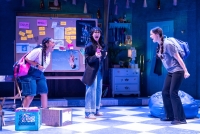
Goodman's Dead Girl’s Quinceañera: When Fifteen Meets the Adult World
07 October 2026 in Theatre in ReviewAt fifteen, the world can feel like a television show you haven't quite figured out how to turn off. For…

Steppenwolf Theatre's ADIRONDACK CHAIR CIRCLE In Rehearsal – Playing October 22 – December 6, 2026 – World Premiere!
07 October 2026 in Upcoming TheatreSteppenwolf Theatre Company, the nation's premier ensemble theater company, is pleased to launch its 51st Season with the world premiere of…
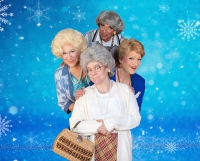
Hell in a Handbag Productions Announces 25th Anniversary Season!
07 October 2026 in Upcoming TheatreHell in a Handbag Productions is thrilled to announce its 25th Anniversary Season, featuring three "camptacular" shows guaranteed to delight lovers of…
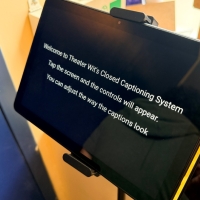
Chicago’s Theater Wit introduces new Watchword closed captioning system, dramatically improving access in all three of its theaters
07 October 2026 in Theatre BuzzChicago’s Theater Wit is now offering new, state-of-the-art closed captioning service, marking a dramatic improvement in making live theater more…

Paramount Theatre’s reimagined A Christmas Carol promises to be a dazzling new, all-ages spectacle for Chicago’s holiday theater season, November 11-January 3
07 October 2026 in Upcoming Theatre“God bless us, everyone,” because there’s a fresh, new, reimagined version of Charles Dickens’ classic tale A Christmas Carol debuting…
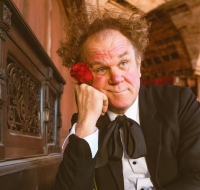
"John C. Reilly is Mister Romantic" Returns to Steppenwolf Theatre - December 10 – 13, 2026
06 October 2026 in Upcoming TheatreFollowing last year's critically acclaimed, sell-out engagement, Steppenwolf Theatre Company is pleased to announce the return of John C. Reilly…

Saint Sebastian Players Open 45th Season With A Murder Is Announced by Agatha Christie Classic Miss Marple Mystery Runs Oct. 23–Nov. 15
06 October 2026 in Upcoming TheatreThe Saint Sebastian Players open their 45th season of travels to different places with A Murder is Announced, a classic Miss Marple mystery…

Announcing "The Goodman, For Good" Campaign
06 October 2026 in Theatre BuzzToday, Goodman Theatre raises the curtain on its future as leadership and artists share a vision for its next century…

Two Edge Theater Company to stage A VIEW FROM THE BRIDGE as its inaugural Chicago production, December 4 through January 10
05 October 2026 in Upcoming TheatreTwo Edge Theater, a reincarnation of the Edge Theater Company that enjoyed eight successful seasons in the Denver, Colorado area,…

Frankenstein at Studebaker Theater adds performances for Halloween run
05 October 2026 in Upcoming TheatreChicago's historic Fine Arts Building and Studebaker Theater are thrilled to announce their Halloween co-production of Manual Cinema's acclaimed Frankenstein…

ANY REBELLION OF WILL - Trap Door Theatre - Through November 1st
05 October 2026 in Now PlayingTrap Door Theatre is thrilled to continue its 33rd season with Any Rebellion of Will, written by S.L. Daniels and…





Latest Articles
-
 “A Strange Loop” Lets the Intrusive Thoughts Win at Raven Theatre in partnership with About Face Theatre
Written by John AccroccoA musical, but it’s just the voices in your head. Sounds just crazy enough to win the 2020 Pulitzer for Drama. “A Strange Loop” by Michael R. Jackson finally makes its Chicago premiere at Raven Theatre in a co-production with…
“A Strange Loop” Lets the Intrusive Thoughts Win at Raven Theatre in partnership with About Face Theatre
Written by John AccroccoA musical, but it’s just the voices in your head. Sounds just crazy enough to win the 2020 Pulitzer for Drama. “A Strange Loop” by Michael R. Jackson finally makes its Chicago premiere at Raven Theatre in a co-production with… -
 Announcing Goodman's 22nd New Stages 2026 Festival Line-Up
Written by Buzz Center StageFrom a "Kung Fu rom-com" to a witchy new musical, The Goodman's popular New Stages Festival in its 22nd year continues to offer a first glimpse at the latest works by a handful of the hottest contemporary playwrights. This year's four-play…
Announcing Goodman's 22nd New Stages 2026 Festival Line-Up
Written by Buzz Center StageFrom a "Kung Fu rom-com" to a witchy new musical, The Goodman's popular New Stages Festival in its 22nd year continues to offer a first glimpse at the latest works by a handful of the hottest contemporary playwrights. This year's four-play… -
Chicago Danztheatre Ensemble Announces 2026-2027 Season
Written by Buzz Center StageChicago Danztheatre Ensemble (CDE) is pleased to announce its 2026 - 2027 season. CDE will open this artistic season with Copestic Vibrations: A Music Festival, Friday, Nov. 13 and Saturday, Nov. 14, followed by a fully staged production of For…
-
Eos Theatre Company Announces Second Production with The Thin Place
Written by Buzz Center StageEos Theatre Company is pleased to announce their second production with Lucas Hnath's horror play The Thin Place, directed by JC Clementz (Steppenwolf's Director of Casting and Artistic Operations), playing February 5 - 28, 2027 in Bramble Arts Loft's Beatrice Theater, 5545 N…


Does your theatre company want to connect with Buzz Center Stage or would you like to reach out and say "hello"? Message us through facebook or shoot us an email at This email address is being protected from spambots. You need JavaScript enabled to view it..
*This disclaimer informs readers that the views, thoughts, and opinions expressed in the text belong solely to the author, and not necessarily to Buzz Center Stage. Buzz Center Stage is a non-profit, volunteer-based platform that enables, and encourages, staff members to post their own honest thoughts on a particular production.