The 1950s is easy to idealize. Men styled tailored suits, women dazzled in pleated dresses, and everything glimmered like it was in a commercial. Life’s troubles were solved with a talk from pop or a hug from mom – or that’s how it seemed. Drury Lane Theatre’s Father of the Bride transports audiences to that romanticized time, and it’s a welcome trip!
Published in 1949, Father of the Bride was adapted for the stage and screen, including two beloved movies starring Hollywood heavy-weights Elizabeth Taylor, Spencer Tracy, and, later, Steve Martin in 1991. While a wedding-gone-wrong may be a familiar story, director Michael Heitzman infused Drury Lane’s rendition with charm, laughter, and sincerity, making it feel fresh.
The play follows Stanley Banks, whose one-and-only daughter prepares for her big day, but she just wants a simple ceremony. Then again, she does want to invite all of her friends… and wants a beautiful dress… and well, by the time everything adds up, the small affair balloons into a whopping headache for dad.
Joe Dempsey’s portrayal of Banks, the set-in-his-ways father, is spot on, and his ad-libbed groans and physical comedy can’t help but make you laugh and empathize with poor, ol’ dad. He balances his old‑school bravado with the teddy-bear-interior so well, creating the heart of the story and avoiding the tired “dumb dad” troupes.

Aurora Penepacker and Jake DiMaggio Lopez in Father of the Bride. Photo by Justin Barbin.
Also making up the family is Rachel Sullivan, who plays the mother, Ellie Banks, with a gentle, confident air, and sons Ben and Tommy are portrayed by Kyle Ringley and Charlie Long, who bring charismatic Leave It to Beaver energy.
Aurora Penepacker plays Kay Banks, the soon-to-be bride with all of the charm of Elizabeth Taylor, and Jake DiMaggio Lopez is her moonstruck, in-over-his-head fiancée, Buckley Dunstan. Their chemistry is fun to watch as every emotion ping-pongs around as their nuptials draw near.
The ensemble also includes some fantastic performances. Michele Vazaquez portrays the tightly wound secretary, Miss Bellamy, who delivers a hilarious meltdown when every member of the family sabotages her efforts to finalize a guest list. Ed Kross brings quirky comedy as the caterer, Mr. Missoula, who steamrolls the Banks (and jumps like Super Mario), and Maya Hlava as Peggy Swift is an overzealous girl-next-door who plots to catch the bouquet.
The original compositions composed by Curtis Moore also deserve a shout-out. They serve as the perfect soundtrack during sequences which showed seasons changing or wedding gifts flooding in and add that extra something that makes you feel like you’re watching your favorite black-and-white sitcom.
Comedy can be tricky to tackle, but Father of the Bride makes ever beat work. It’s whimsical, playful, and a reminder that when things go awry, those you love will always be there. Father of the Bride is an invitation to a pure, wholesome evening, and it’s an invite you should not pass up.
Father of the Bride runs through May 31 at Drury Lane Theater. Click here for tickets and more information.
This review is proudly shared with our friends at www.TheatreInChicago.com.
Theresa Rebeck’s Poor Behavior at Oil Lamp Theatre, directed by Lauren Katz, opens with the easy warmth of old friends reconnecting - only to reveal how quickly a shared history can curdle. Within minutes, the play exposes the messy, magnetic dynamics that will drive the evening off the rails.
Peter and his wife, Ella (Jack Morsovillo and Ksa Curry), have welcomed their longtime friends, Ian and Maureen (Sam Fain and Lauren Paige), to their getaway country home for what’s meant to be an easy, wine‑soaked weekend. At first, everything feels harmless enough: the four drift around the kitchen and dining area, chatting, teasing, negotiating snacks - Peter is fixated on getting ice cream, Maureen keeps the small talk humming - the kind of casual domestic bustle that suggests comfort and history. But the mood shifts quickly when Ella and Ian slip into a heated exchange. Their rhythm is so practiced, so charged, that it feels less like a friendly debate and more like a well‑worn battleground. The familiarity between them is startling; before the play has even fully settled, you can’t help but wonder whether these two are circling an old intimacy the others aren’t acknowledging.
Ella insists - almost with a kind of moral urgency - that there is still goodness in the world, that people are capable of generosity and grace if you’re willing to look for it. Ian, however, has no patience for her optimism. Once enamored with America when he first arrived from Ireland, he now sees the country through a far bleaker lens. Every example Ella offers is batted away; to Ian, America is a place that devours resources, exploits the planet, and disguises greed as virtue. His cynicism isn’t casual - it’s sharpened, almost weaponized - and the more Ella pushes, the more he digs in. The argument escalates until the air in the room feels charged and brittle, the kind of tension that makes everyone else freeze. And then, just as it threatens to tip into something truly damaging, they both pull back. Cooler heads prevail, apologies surface, and the group collectively pretends they haven’t just witnessed a fault line crack open beneath the weekend – for the moment.
Peter has known Maureen since childhood - his brother even dated her for a time - and that shared history lends their friendship an instinctive ease. Neither couple has children, a fact they use, somewhat conveniently, to justify how tightly they cling to one another’s company. But do they actually like each other as much as they claim? As the evening unfolds, small cracks begin to show. The conversation among the foursome is lively enough on the surface, yet it quickly becomes clear that each marriage carries its own quiet fractures. Then, when Maureen misinterprets a moment of consolation between Ella and Ian - whose father has just died, or so he says - the weekend tilts sharply off its axis. Accusations fly, lies multiply, manipulation takes root, and before long the polite veneer between these two couples is stripped away entirely.

(L to R) Sam Fain, Ksa Curry, Jack Morsovillo and Lauren Paige in POOR BEHAVIOR from Oil Lamp Theater. Photos by Gosia Matuszewska - GosiaPhotography.com.
At first, the “poor behavior” can be dismissed as simple drunkenness - after all, Ian has plowed through four bottles of wine on his own. But as the night wears on, it becomes clear that alcohol is only the accelerant, not the cause. Rebeck gradually peels back the layers on all four characters: Maureen, whose anxiety and emotional fragility leave her grasping for reassurance; Ian, who seems to relish stoking doubt and discomfort whenever the opportunity presents itself; Ella is idealistic but is clearly withholding something; it’s subtle, but the undercurrent of it hums beneath everything she does; and mild-mannered Peter, who defaults to denial, choosing avoidance over confrontation and clinging to the hope that he can simply walk away from the weekend as though nothing has happened. What begins as sloppy, alcohol-fueled bickering soon exposes the fault lines that have been waiting for the slightest spark to rupture.
Sam Fain and Ksa Curry deliver two of the evening’s most arresting performances, their scenes pulsing with an undeniable, almost disarming connection from the get-go. Fain’s Ian commands the room with a dangerous charm, twisting conversations to his advantage while letting flashes of buried desire slip through the cracks, while Curry’s Ella meets him with a grounded emotional intelligence that reveals the deeper currents Rebeck threads beneath their exchanges. Lauren Paige brings a raw, aching vulnerability to Maureen, charting her spirals of insecurity with precision and empathy, and Jack Morsovillo anchors the chaos as Peter, his quiet restraint and mounting frustration giving the play its moral center.
The arguing is relentless, and the tension feels startlingly real. Under Lauren Katz’s direction, the world of Poor Behavior becomes a room primed to combust with every glance, pause, and interruption calibrated to reveal the messy, volatile dynamics between these four characters. Katz cultivates a realism so precise that the uncomfortable moments become genuinely unsettling, keeping us on our toes as we anticipate what might unfold next - good or bad. And though we may root for these couples to find their way back to solid ground, the production holds us captive with the stark authenticity of their unraveling, a truthfulness that makes the prospect of reconciliation feel increasingly remote. Rebeck’s script raises thorny questions about the strength of relationships, the dangers of complacency (or not – for some), the limits of tolerance, and the moment when “enough” finally becomes enough - and Katz ensures those questions echo long after the final scene.
The thoughtfully crafted set serves this play perfectly, which strengthens the production’s overall effectiveness. Trenton Jones shapes a kitchen‑and‑dining‑room layout that feels like a genuinely lived‑in countryside home. A staircase rises toward the suggested upstairs bedrooms, while just beyond the kitchen refrigerator sits the entrance to a ground‑floor guest room. The result is a spacious‑looking design that expands the world of the play and works remarkably well on Oil Lamp’s intimate stage.
Oil Lamp Theater’s well-paced Poor Behavior succeeds because every element - Rebeck’s incisive writing, Katz’s sharply attuned direction, and a quartet of deeply committed performances - works together to illuminate the muddled, contradictory ways people love, wound, and misread one another. The staging embraces discomfort without sacrificing its humanity, inviting us to recognize uncomfortable truths about ourselves in the chaos onstage. By the time the lights fade, we’re left with the uneasy understanding that relationships don’t always resolve neatly, yet the effort to navigate them is what makes us unmistakably human. It’s the kind of play that stays with you long after you’ve left the theater.
Poor Behavior is being performed at Oil Lamp Theatre through May 10th. For tickets and/or more show information, click here.
Highly recommended.
This review is proudly shared with our friends at www.TheatreInChicago.com.
Shakespeare’s comedies share a familiar architecture: mistaken identity, disguises, intersecting plotlines, a generous helping of prose, and language that delights in wordplay and double entendre. They are also, crucially, driven by sharp, intelligent women who often see more clearly than the men around them. With that foundation in mind, Chicago Shakespeare Theater’s production of The Merry Wives of Windsor leans confidently into these conventions - and then accelerates them - resulting in a delightfully mischievous evening.
Directed with precision and pace by Phillip Breen, the production wastes no time settling in. It moves briskly, almost breathlessly at times. Breen understands that comedy, especially Shakespearean comedy, thrives on rhythm. Doors must slam at just the right moment, disguises must be revealed a beat too late, and jokes must land before the audience has time to anticipate them. Here, the timing is razor-sharp, aided immeasurably by a cast of 22 actors who navigate the text with clarity and ease.
Max Jones’ set design cleverly situates Windsor in a contemporary world of affluence and quiet excess. This is a town where privilege is not just visible - it is assumed. Children attend private school, men play rugby, and women occupy a social sphere of lunches and shopping that doubles as a kind of informal power network. The Garter Inn, rendered as a dimly lit bar with a billiards table anchoring the space, becomes a playground for Falstaff’s schemes. In contrast, Dr. Caius’ sterile office reception area offers a clinical absurdity, while the Ford household gleams with white carpeting, glass, and sweeping staircases - its opulence undercut by the chaos unfolding within. A particularly fluid set change transforms the space with near-magic, reinforcing the play’s obsession with illusion and transformation. The final forest scene, textured with dirt mounds and trees, grounds the production just enough before it tips fully into theatrical fantasy.
What emerges most clearly in this production is the idea that Windsor is a world turned slightly askew. No one is quite what they claim to be. The knight, Sir John Falstaff, is anything but noble - he is vain, opportunistic, and gloriously ridiculous. The doctor, Caius, is less healer than hot-headed rival, perpetually threatening violence. The clergyman’s thick accent renders him a subject of humor rather than authority. Even the Justice of the Peace seems more eager for confrontation than civility. It is a community in which status is worn like a costume—and just as easily discarded.

Photo by Kyle Flubacker.
At the center of it all are the “merry wives,” who prove themselves to be the most grounded and perceptive figures on stage. Ora Jones’ Mistress Page and Issy Van Randwyck’s Mistress Ford anchor the production with wit and composure. They are never merely reactive; they orchestrate the action, turning Falstaff’s attempted manipulation into a series of escalating humiliations. Their intelligence drives the comedy, ensuring that the laughter always has a point of view.
The supporting cast is equally strong. Chike Johnson’s Master Page exudes an easy confidence, while Timothy Edward Kane’s Master Ford leans fully into the character’s jealousy, finding both humor and unease in his suspicion. Nate Burger’s Dr. Caius is a comic standout, his bluster and indignation landing with delightful force. Nancy Voigts brings a bustling energy to Mistress Quickly, threading together the play’s many schemes, while Paul Oakley Stovall’s Justice Shallow captures the absurdity of self-importance.
And then there is Jason Simon’s Falstaff - a performance that embraces the character’s excess without apology. Legend has it that Queen Elizabeth I so adored Falstaff that she demanded to see him in love. Here, however, Falstaff is in love with nothing so much as himself. Simon leans into that vanity, crafting a figure who is both despicable and irresistibly watchable. His repeated downfalls never diminish him; instead, they reveal the elasticity of his ego.
Ultimately, this production succeeds because it trusts the mechanics of Shakespearean comedy while fully committing to its world. Disguises are embraced, identities are blurred, and language sparkles with innuendo. Yet beneath the laughter lies a sharper observation: that power, status, and even identity itself are often performances. In Windsor, everyone is playing a role - some just play it better than others.
Highly Recommended
When: Through May 3
Where: Chicago Shakespeare Theater 800 East Grand Avenue in Chicago
Tickets: $60 - $120
Box Office: 312-595-5600
Info: www.chicagoshakes.com
This review is proudly shared with our friends at www.TheatreInChicago.com.
As I entered the black box studio at Chicago Shakespeare Theater, I’ll admit - I wasn’t in the best frame of mind. Before leaving home, I’d watched the news: the endless cycle of violence, bombings, and that tired “us versus them” narrative that seems to define our moment. My spirit felt worn down. On top of that, I had spent the day finishing a review from earlier in the week, so I arrived more drained than inspired. Theatre, on this night, felt like an obligation.
Then Mrs. Krishnan’s Party happened - and everything shifted.
Instead of the usual routine of being guided to my seat by The Saints, I was greeted at the door by James (Justin Rogers), dressed in an outfit that immediately caught my attention. He asked my name. We talked. It wasn’t forced or performative - it was genuinely human. By the time he led me to my seat, the invisible barrier between audience and performer had already begun to dissolve. He introduced me to the people around me: to my left, a well-traveled gentleman from Ohio by way of India; to my right, a mother and daughter who helped identify James’s attire as a South Indian costume, rich with cultural specificity. Already, I wasn’t just watching a show - I was part of a group.
That’s when I realized we were not simply audience members, but guests of James, who was hosting a surprise party for his landlady. The occasion is Onam - a vibrant harvest celebration rooted in the southern Indian state of Kerala. What unfolds is not just theatre, but an act of radical hospitality. Music pulses. Conversations bloom. Strangers become co-conspirators in joy. This show is more than immersive - it is enveloping, dissolving the line between performer and audience until you’re no longer watching a story, you’re living inside it.
This approach is the hallmark of Indian Ink Theatre Company, the New Zealand-based ensemble behind the production. Founded by Justin Lewis and Jacob Rajan in the late 1990s, the company has earned an international reputation for creating intimate, actor-driven works that blend South Asian storytelling traditions with contemporary theatre. Their work explores identity, migration, and cultural hybridity through a deeply human - and often humorous - lens. More than anything, they prioritize connection: their productions don’t just tell stories; they build shared experiences.
And that’s what undid me.

Photo courtesy of Indian Ink Theatre Company.
When Mrs. Krishnan (Kalyani Nagarajan) finally arrives, she is startled to find the back of her small shop filled with strangers. There’s hesitation - this wasn’t her plan - and beneath it, something heavier lingers. As the evening unfolds, we begin to feel the weight she carries: the loss of her husband, the quiet ache of a son - an architect - now gone. These moments settle into the space with a tender gravity, reminding us that her warmth is hard-earned.
And yet, just as the story begins to lean into that sorrow, the play grabs and lifts us again. Laughter breaks through, balloons appear. Music returns. The room brightens. What begins as disruption transforms into delight as she embraces the gathering and, in a gesture both intimate and communal, decides to cook daal for all of us. In that moment, grief and joy exist side by side—each making space for the other.
Somewhere between the laughter, the dancing, and the smell of daal, the heaviness I carried into the theatre dissolved. Not in a naïve or escapist way, but in a way that felt necessary. Soundly directed by Justin Lewis, the show doesn’t ignore the fractured world outside; it quietly insists on another possibility within it: community, warmth, shared humanity.
By the end of the evening, I realized I hadn’t just watched a play - I had been in community with people different than me, yet deeply the same. In a time when division dominates the headlines, Mrs. Krishnan’s Party offers something deceptively simple and profoundly radical: a room full of strangers choosing, for a moment, to be together.
And that, right now, feels like everything.
Recommended
When: Through May 3rd
Where: Chicago Shakespeare Theatre 800 East Grand Avenue in Chicago.
Tickets: $74 - $90
Box Office: 312.595.5600
Info: www.chicagoshakespeare.com
This review is proudly shared with our friends at www.TheatreInChicago.com.
The Tony Award® winning Best Musical, THE OUTSIDERS, based on the seminal novel by S.E. Hinton and Francis Ford Coppola’s landmark motion picture, will return to Broadway In Chicago’s Cadillac Palace Theatre this summer, August 4 – 16, 2026, after a sold-out engagement earlier this year. Groups of 10+ are now available by calling 312-977-1710 or emailing This email address is being protected from spambots. You need JavaScript enabled to view it.. Single tickets will go on sale Monday, April 20. For more information, visit www.BroadwayInChicago.com.
“We are thrilled to bring THE OUTSIDERS back to Chicago this summer,” said producer Matthew Rego of The Araca Group. “After an extraordinary sold-out run this past winter, Chicago audiences made it clear they were ready for a return and we are grateful for the opportunity to deliver another engagement.”
In Tulsa, Oklahoma, 1967, Ponyboy Curtis, his best friend Johnny Cade and their Greaser family of ‘outsiders’ battle with their affluent rivals, the Socs. THE OUTSIDERS navigates the complexities of self-discovery as the Greasers dream about who they want to become in a world that may never accept them. With a dynamic original score, THE OUTSIDERS is a story of friendship, family, belonging…and the realization that there is still “lots of good in the world.”
The winner of four 2024 Tony Awards, including Best Musical, THE OUTSIDERS features a book by Tony Award nominee Adam Rapp with Tony Award winner Justin Levine, music and lyrics by Tony Award nominees Jamestown Revival (Jonathan Clay & Zach Chance) and Justin Levine, music supervision, orchestration & arrangements by Justin Levine, choreography by Tony Award nominees Rick Kuperman & Jeff Kuperman and is directed by Tony Award winner Danya Taymor.
THE OUTSIDERS features Scenography by Tony Award nominees AMP featuring Tatiana Kahvegian, Costume Design by Sarafina Bush, Lighting Design by Tony Award winner Brian MacDevitt, Sound Design by Tony Award winner Cody Spencer, Projection Design by Tony Award winner Hana S. Kim, Special Effects Design by Jeremy Chernick & Lillis Meeh, Hair & Wig Design by Alberto “Albee” Alvarado, Makeup Design by Tishonna Ferguson, Sound Effects Specialist Taylor Bense, Creative Consultant Jack Viertel. Speech Text & Dialect Coach Gigi Buffington. Music Supervision & Additional Orchestrations by Tony Award nominee Matt Hinkley, Music Direction by Remy Kurs. Production Supervision by Beverly Jenkins, Production Stage Management by Edmond O’Neal. Casting is by The TRC Company/Xavier Rubiano, CSA
THE OUTSIDERS opened on Broadway on April 11, 2024, to rave reviews and continues to play to sold out houses at the Jacobs Theatre (242 West 45th Street). The New York Post proclaims THE OUTSIDERS as “THE BEST NEW MUSICAL OF THE SEASON." “STUNNING THINGS ARE HAPPENING ON THE STAGE OF THE JACOBS THEATER. Electrifying. Astonishing. Endlessly effective. THE OUTSIDERS has been made with so much love and sincerity. It is fair to call it golden." says The New York Times. Entertainment Weekly says, “THE OUTSIDERS has a heart of gold and THE POWER TO INSPIRE AN ENTIRE GENERATION.” “AN EXHILARATING WORLD OF MOVEMENT WITH HIGH-OCTANE CHOREOGRAPHY,” states New York Magazine. Time Out New York calls it “RAW AND MORE PULSE-POUNDING than anything else on Broadway right now."
THE OUTSIDERS is produced on tour by The Araca Group, American Zoetrope, Olympus Theatricals, Sue Gilad & Larry Rogowsky, Angelina Jolie, Betsy Dollinger, Jonathan & Michelle Clay, Cristina Marie Vivenzio, The Shubert Organization, LaChanze & Marylee Fairbanks, Debra Martin Chase, Sony Music Masterworks, Jamestown Revival Theater, Jennifer & Jonathan Allan Soros, Tanninger Entertainment, Tamlyn Brooke Shusterman, Mistry Theatrical Ventures, Galt & Irvin Productions, Tulsa Clarks, Paul & Margaret Liljenquist, Bob & Claire Patterson, Voltron Global Media, James L. Nederlander, Warner Bros. Theatre Ventures, The John Gore Organization, Independent Presenters Network, Stephen Lindsay & Brett Sirota, Jeffrey Finn, Playhouse Square, ASR Productions, Indelible InK, Lionheart Productions, The Broadway Investor’s Club, Starhawk Productions, Distant Rumble, GTR Productions, Green Leaf Partnership, Michael & Elizabeth Venuti, Leslie Kavanaugh, Deborah & Dave Smith, Belle Productions, Chas & Jen Grossman, Rungnapa & Jim Teague, Michael & Molly Schroeder, Casey & Chelsea Baugh, Jim & Emily Flautt, Jon L. Morris, Becky Winkler, William Moran Hickey Jr. & William Moran Hickey III, Melissa Chamberlain & Michael McCartney, Wavelength Productions, Rob O’Neill & Shane Snow, Eric Stine, Rachel Weinstein, Cornice Productions and La Jolla Playhouse.
The Grammy-nominated Original Broadway Cast Recording of THE OUTSIDERS from Sony Masterworks Broadway is now available at https://theoutsidersbroadway.lnk.to/castalbum.
The world premiere of THE OUTSIDERS was produced by La Jolla Playhouse, Christopher Ashley, Artistic Director and Debby Buchholz, Managing Director, in March 2023.
OutsidersMusical.com
Follow THE OUTSIDERS on Instagram, TikTok, and Facebook.
ABOUT BROADWAY IN CHICAGO
Broadway In Chicago was created in July 2000 and over the past 26 years has grown to be one of the largest commercial touring homes in the country. A Nederlander Presentation, Broadway In Chicago lights up the Chicago Theater District entertaining up to 1.7 million people annually in five theatres. Broadway In Chicago presents a full range of entertainment, including musicals and plays, on the stages of five of the finest theatres in Chicago’s Loop including the Cadillac Palace Theatre, CIBC Theatre, James M. Nederlander Theatre, and just off the Magnificent Mile, the Broadway Playhouse at Water Tower Place and presenting Broadway shows at The Auditorium™.
For more information and tickets, visit www.BroadwayInChicago.com.
Follow @BroadwayInChicago on Facebook, Instagram , TikTok, and Bluesky #BroadwayInChicago
Goodman Theatre’s production of Ma Rainey's Black Bottom arrives with the weight of expectation - and under the dual direction of Chuck Smith and Harry Lennix, it does not merely meet that weight, it reshapes it. This is not a revival of August Wilson’s searing text; it is a precise, muscular excavation of its tensions, its music, and its truths.
From the outset, the production leans into what makes Ma Rainey distinct within Wilson’s canon: its compression. There is no sprawling Hill District, no generational sweep - only a room, a day, and a reckoning. Smith and Lennix understand this pressure-cooker structure and allows it to simmer deliberately. The pacing is patient but never indulgent, each pause and eruption calibrated to expose the fractures between the woman, the men and the system that contains them.
At the center stands E. Faye Butler’s Ma Rainey, and “center” is not metaphorical - it is gravitational. Butler embodies what makes Ma singular among Wilson’s women: she is not surviving the system, she is making the system bend to her will. Where characters like Rose in Fences or Bertha in Joe Turner’s Come and Gone endure with moral resilience, Ma operates with economic and performative authority. Butler’s Ma is unapologetically self-possessed, openly sensual in her relationship with Dussie Mae, and fiercely aware of her value. Every demand - a Coca-Cola, a delay, a correction - is less eccentricity than strategy. She dictates the terms, and the room adjusts.
Surrounding her is a cast that functions both as ensemble and as volatile elements in a dramatic equation. Al’Jaleel McGhee’s Levee is electric, restless, and dangerously unmoored. He captures the tragic duality of the character: brilliance tethered to illusion. His performance builds like a slow burn until it detonates, revealing the unresolved trauma and misplaced faith in a system that will never reward him. In contrast, David Alan Anderson’s Cutler is grounded, pragmatic, a man who has learned the cost of survival. Kelvin Roston, Jr.’s Toledo brings intellectual weight, his reflections on Black identity landing with quiet force, while Cedric Young’s Slow Drag occupies the margins with understated authenticity.
The white power structure—embodied by Matt DeCaro’s Sturdyvant and Marc Grapey’s Irvin - is rendered with chilling subtlety. There is no overt villainy here, only the smooth machinery of exploitation. Irvin’s politeness is the point; it is the veneer that makes the system function.

Ma Rainey’s Black Bottom at Goodman Theatre. (L-R) Jabari Khaliq, E. Faye Butler, Kelvin Roston Jr.
Visually, the production is nothing short of exquisite. Linda Buchanan’s set design transforms the stage into a 1920s Chicago recording studio that feels both expansive and suffocating. The inclusion of distinct spaces - the recording area, control room, rehearsal room, even a suggestion of the street - creates a dynamic environment while maintaining the play’s essential confinement. This is a world built for observation and control.
Jared Gooding’s lighting design elevates this world into something almost cinematic. The suggestion of the Chicago Loop’s overhead train is particularly striking, its presence looming like an industrial heartbeat. Gooding uses light not just for visibility but for composition - creating tableaus, isolating tensions, and guiding the audience’s eye with precision.
And then there are Evelyn M. Danner’s costumes, which operate as visual dramaturgy. The color palette tells its own story: Irvin and Sturdyvant in stark black and white, embodiments of rigid power; the band in various shades of brown, signaling labor, reliability, and earthbound existence; and Ma Rainey in a commanding money-green dress, a walking declaration of her worth. Dussie Mae’s yellow flapper dress, accented with green, subtly marks her proximity to that wealth and power. Even Sylvester’s patterned brown attire hints at his connection to Ma’s orbit. Every choice is intentional, every color a statement.
What ultimately distinguishes this production is its understanding of language - not just Wilson’s text, but the music within it. The scenes among the band members crackle with rhythm and lyricism, their banter and arguments forming a kind of blues composition. It is beautiful, but volatile - a powder keg of masculinity, frustration, and deferred dreams.
What Chuck Smith and Harry Lennix achieve is extraordinary. They do not merely stage Ma Rainey's Black Bottom; they orchestrate it, allowing every performance, every design element, every silence to resonate with intention. Nowhere is that more evident than in Levee’s arc, where Al’Jaleel McGhee delivers a performance that simmers with ambition and barely contained rage, his volatility carefully shaped into a slow, inevitable unraveling.
This is direction of the highest order - precise, unflinching, and deeply attuned to the rhythms of Wilson’s language and the weight of his themes. What emerges is not just unforgettable theatre, but necessary theatre: a production that insists we listen more closely, look more deeply, and reckon more honestly with the truths it lays before us.
HIGHLY RECOMMENDED
When: Through May 3
Where: Goodman Theatre, 170 N. Dearborn St.
Tickets: $44-$84
Info: www.goodmantheatre.org
Box Office: 312-443-3800
This review is proudly shared with our friends at www.TheatreInChicago.com.
I’m going to start with a bit of backstory. In high school we all read (more or less voluntarily) The Iliad, Homer’s poetic exploration of a war that occurred during the Bronze Age yet continues to resonate with twenty-first century significance. Homer focuses (naturally!) on the guys: heroic Greek Achilles and his lover Patroclus; Hector, prince and hero of Troy; Greek King Menelaus vs. Paris, Prince of Troy. The women are pretty much either pawns or plunder. The Iliad begins with Hector’s baby bro Paris swiping Helen, wife of Menelaus. Menelaus and Paris duel, intending Helen to be the prize, but when Paris is defeated, Aphrodite delivers him to Helen’s bed before Menelaus has a chance to kill him – a good example of the ambivalent outcomes when the gods and goddesses mix it up with mortals. THE TROJAN WOMEN actually begins with an introduction by Poseidon (Brian Weddington), god of the sea, and Rachel Sledd as Athena, goddess of war.
THE TROJAN WOMEN analyzes the costs of war through the trauma and grief of the Trojan women after their city has been sacked, their husbands killed, and their remaining families taken away as slaves. It’s set in a present-day hospital maternity ward that’s serving as confinement for troublesome females. The Chorus (Morgan Lavenstein), that hallmark of ancient Greek drama who provides insight into events both on- and offstage, appears as a woman vastly pregnant and chained to the bed. She’s not best pleased at any of this, and no more tickled about rooming with Hecuba (Ashway Lawver), queen of vanquished Troy and vehemently unreconciled to its overthrow.
Ben Page is Talthybius, a Greek herald who pops in and out with news bulletins, each more hideous than the last. His is the task to reveal to the women their destinies: Hecuba will be given to the Greek king Odysseus, the widowed princess Andromache (Jazmine Mazique) is to be the concubine of Achilles’ son, and Cassandra (Liliana Mastroianni) is destined to become the conquering king Agamemnon’s doxy. Cassandra is clairvoyant, which one might assume to be an asset, but her mother has always dismissed her revelations as hysterical attention-seeking, especially as in such grievous times the future may not be something you really want to hear about. Andromache, Princess of Troy, has just borne a son to her ex-husband ex-Prince Hector, and Talthybius must also break the news that her baby must die, as the Greeks fear he will grow up to avenge his father Hector. And Helen (Morgan Burkey), whose beauty launched a thousand playwrights, ends up back with her husband Menelaus (Marcus Castillo). There’s lots of babies around – we’re in a maternity ward, remember? – and babies are a natural outcome of the unbridled rape that is ubiquitous in wartime; in fact, it appears that the primary position of women in conquered Troy is prone. Plus, ça change, plus c'est la même chose.
OK, are you more or less caught up on characters and setting? cos I need to tell you about Eos Theatre Company. Their stated mission is ‘to shine light into the darkness of the human condition and to amplify women’s voices and stories’, and they’ve chosen THE TROJAN WOMEN as their inaugural presentation because it does both brilliantly. The four co-founders of Eos united at the first table read of The Trojan Women in February 2025. That production was not only fabulous but propagative as well: the four decided to remount the show and simultaneously create a brand-new, all-woman company, named EOS in honor of the Greek Goddess of the dawn who flies her chariot across the sky, pulling back the curtain of night to usher in the light of the sun.
Rachel Sledd is a born-and-bred Chicagoan who lived and acted between New York and Los Angeles until 2006, when she returned to her hometown. Ashway Lawver grew up in Los Angeles. Her passion for the art and study of Acting led her to Chicago to attend The School at Steppenwolf and she found in Chicago her true theatrical home. Morgan Lavenstein began acting in Baltimore at the ripe old age of 8. She attended The School at Steppenwolf and Chicago became her forever home. Morgan Burkey is originally from Texas. In 2017 she was accepted into School at Steppenwolf, where she met fellow co-founders Morgan Lavenstein and Ashway Lawver. Amazing, innit, how extraordinary people from far-flung origins are drawn together? Call it destiny, fate, or kismet, in this case it’s providential.
The production team was as superb as the cast. Co-founder Rachel Sledd was Director and Michael Lesko Stage Manager. Shayna Patel’s Set Design portrayed the ambience before the actors took the stage. The story was encompassed by Mason Absher’s Sound; his choices of music interlocked perfectly and toward the end the impassioned sound pulled the storyline together, as did Garrett Bell’s breathtaking lighting effects.
Seeing THE TROJAN WOMEN was thrilling not only for the splendid play itself, but for the chance to witness the emergence of Eos, a feminist company whose development is sure to beguile and invigorate Chicago for years to come.
Running through April 18th at Bramble Arts Loft
RECOMMENDED
This review is proudly shared with our friends at www.TheatreInChicago.com.
|
||
|
Under the leadership of Marilyn F. Vitale Artistic Director Avery Willis Hoffman and Executive Director Angel Ysaguirre, Court Theatre is proud to announce its 72nd season. As America marks 250 years of nationhood, Court Theatre, as Chicago's premier stage for classic work, responds with a season that examines our shared pursuit of Life and Liberty.
The 2026/27 season will feature the American premiere of Winsome Pinnock's Tituba, set in colonial Salem against the backdrop of the infamous witch trials, directed by Associate Artistic Director Gabrielle Randle-Bent, with dramaturgy by Avery Willis Hoffman, performed at the University of Chicago's iconic Rockefeller Memorial Chapel. Following Tituba, we move to twentieth-century Pittsburgh one last time as Resident Artist Ron OJ Parson directs August Wilson's masterwork, Joe Turner's Come and Gone, bringing his staging of the August Wilson American Century Cycle at Court Theatre to a triumphant conclusion. We then proudly feature Luis Alfaro's Mojada, a blistering reimagining of the Greek classic Medea, as a testament to twenty-first century immigrant life in Chicago, produced in partnership with Teatro Vista Productions and directed by Wendy Mateo and Denise Yvette Serna. The season concludes with safronia, an epic new opera that highlights a family's fight for justice across generations, created by inaugural Chicago Poet Laureate avery r. young and directed by Timothy Douglas.
Court Theatre's 72nd season is an exploration of Life, Liberty, and the Pursuit. America is at an undeniable inflection point. We, as a set of complex communities, are reexamining our systems and very ways of being, challenging long-held beliefs, and asking urgent questions. Theatre—which we believe to be a foundational pillar of civic discourse—helps us to find new pathways through complicated times. The 2026/27 season peers deep into the heart of distinctly American stories—with all their nuance, contradictions, and beauty—and reaffirms the crucial resilience of the classics.
Marilyn F. Vitale Artistic Director Avery Willis Hoffman shares, "As our country passes a historic milestone, Court's 2026/27 season works towards demonstrating theatre's place at the center of civic life. Our art form has historically offered fresh perspectives, inspired spirited discourse, and created unique and shared experiences that help us better understand each other and ourselves. In this moment of intense reflection, we are re-committing to this complicated, but basic, mission, all of which feels increasingly urgent, and getting to the heart of how theatre can make a real impact. In my first full season as the new Marilyn F. Vitale Artistic Director, I am proud that Court is leading these conversations."
Executive Director Angel Ysaguirre adds, "The 2026/27 season affirms that American stories are varied, complex, and beautiful, and it has something for everyone. From Resident Artist Ron OJ Parson's historic completion of the August Wilson Century Cycle, to a new opera, to a national premiere, to a Chicago-specific adaptation, this season stretches our expectations and expands the boundaries of our art form. This is exciting for us, our audiences, and the artists we're working with—some of whom we're thrilled to welcome to Court's stage for the first time. We can't wait to present a season that is as varied, complex, and beautiful as the America outside our doors."
The first production in Court Theatre's 2026/27 season begins in December 2026, markedly later than years past, and will take place offsite at the University of Chicago's Rockefeller Memorial Chapel. Court's Abelson Auditorium will be dark for the summer and fall of 2026 as we modernize our lighting equipment and implement a new fall protection system. These changes will create a safer working environment for theatre technicians, and provide necessary and exciting updates to our intimate house.
The 2026/27 Court Theatre Season Up Close:
AMERICAN PREMIERE
TITUBA
By Winsome Pinnock
Directed by Associate Artistic Director Gabrielle Randle-Bent
Dramaturgy by Marilyn F. Vitale Artistic Director Avery Willis Hoffman
Limited Engagement at Rockefeller Memorial Chapel
December 2026, dates to be announced
Performed in the hallowed halls of the University of Chicago's Rockefeller Memorial Chapel, the 2026/27 season opens with the American premiere of Tituba—a theatrical experience that offers a new lens on pre-Revolutionary War America through spiritually charged language, music, and dance.
In this solo performance, Tituba—the real-life person accused in the Salem witch trials of 1692 and featured in Arthur Miller's classic The Crucible—invites the audience to journey through her mystical world to hear her side of the story. With care and wry humor, she details her history with the girls in Salem Village, her beloved mother and husband, Reverend Parris's rage, the violence of enslavement, and her unspoken indigenous name, building to a scathing climax and the ignition of historic mass hysteria.
Set against the backdrop of the institution that accused Tituba centuries ago, Associate Artistic Director Gabrielle Randle-Bent directs, with dramaturgy by Marilyn F. Vitale Artistic Director Avery Willis Hoffman. Together, they bring Tituba's life story to light in a sacred place, uplifting her voice and showcasing the transformational power of storytelling.
JOE TURNER'S COME AND GONE
By August Wilson
Directed by Resident Artist Ron OJ Parson
January 8 - February 7, 2027
More than twenty years in the making, Resident Artist Ron OJ Parson completes a defining chapter of his artistic legacy. With Joe Turner's Come and Gone, Parson completes August Wilson's American Century Cycle and joins an elite circle of directors who have staged all ten plays at the same theatre.
It is 1911, and Harold Loomis and his daughter, Zonia, have been on the road for years, searching for Zonia's mother and, unbeknownst to Harold, chasing his forgotten song. Their journey leads them to Seth Holly's boardinghouse, where they meet Holly, his wife, and fellow boarders who, like them, are in relentless pursuit of love, identity, freedom, and purpose.
Wilson's iconic, evocative prose and vivid characters shine in this portrayal of a nation haunted by slavery, with spirits around every corner and no escape in sight.
Ron OJ Parson's residency is made possible by The Joyce Foundation.
MOJADA
By Luis Alfaro
Directed by Wendy Mateo and Denise Yvette Serna
Presented In Partnership with Teatro Vista Productions
March 12 - April 11, 2027
An adaptation of an ancient classic tale of revenge, sacrifice, and the high price of pursuing freedom, Mojada renders Euripides's Medea myth urgently and achingly alive in the city of Chicago.
Medea survived a treacherous journey from Mexico to the United States in search of a better life, but the promise of the American Dream is quickly unravelling. She sews exquisite garments in her backyard, suffocated by fear. Her son sheds tradition as fast as he can, trading huaraches for Vans. And her husband grows distant, seduced by ambition and proximity to power. Trapped between who she was and who America demands she become, Medea finds herself in a standoff with the very dream she risked everything to reach.
Co-directed by Teatro Vista Productions' Artistic Director Wendy Mateo and Artistic Collective member Denise Yvette Serna, Mojada confronts the contradictions at the center of American identity: opportunity and erasure, belonging and betrayal. Both a love letter and a searing indictment, this electrifying production asks: What are we willing to sacrifice in the pursuit of liberty?
safronia
Written, composed, and scored by avery r. young
Directed by Timothy Douglas
May 14 - June 13, 2027
An extraordinary new opera from inaugural Chicago Poet Laureate avery r. young, safronia blends gospel, blues, funk, folklore, poetry, and history to tell a tale of triumph and trauma, ownership and loss. Banished from their land, the Booker family is deadset on reclaiming what's theirs and granting their patriarch's last wish. But one final reckoning remains: safronia must avenge her father's death.
safronia is an epic poem told through the vibrant music of the hundreds of thousands who journeyed to Chicago during the Great Migration—and a revelatory conclusion to the 2026/27 season. It celebrates the sonic legacy of artists like Curtis Mayfield, Nina Simone, and Oscar Brown Jr., and completely reimagines the scope of the American classical music landscape.
After mounting a concert-style performance at Lyric Opera, composer avery r. young and director Timothy Douglas bring a fully realized production to Court's intimate venue, promising an evening that shimmers, soars, and binds us in a communal American history.
safronia was workshopped and commissioned by Lyric Opera of Chicago, with its world premiere concert-style production at Lyric Opera House on April 17-18, 2026.
Subscription Information
Three and four-play subscriptions to Court's 2026/27 season range from $120 to $300 and are on sale now. Please note, seating at Rockefeller Memorial Chapel is general admission; subscribers will receive access to the preferred section. To purchase a subscription or to receive more information, call the Court Theatre Box Office at (773) 753-4472, or visit Court's website at CourtTheatre.org. Individual tickets for Tituba will go on sale September 1st. Individual tickets for all other productions will go on sale October 1st.
About the Artists
WINSOME PINNOCK (Tituba Playwright) is a recipient of the 2022 Windham-Campbell Prize. She was born in Islington, North London, and is an award-winning playwright and dramaturg. Her work has been produced on the British stage and internationally since 1985. She was the first black British female writer to have a play produced by the Royal National Theatre. Winsome was Associate Professor in Drama at Kingston University from 2005 to 2019, and was Senior Visiting Fellow at Cambridge University. She has worked as a dramaturg with the Royal National Theatre's New Views scheme as well as with the Royal Court's International Department. The prizes awarded to her work include the George Devine Award, The Pearson Plays on Stage Award and the Unity Theatre Trust Award.
GABRIELLE RANDLE-BENT (Tituba Director, Associate Artistic Director) is a mother, director, dramaturg, and scholar. Her directorial highlights include A Raisin in the Sun; Antigone; The Island; and The Tragedy of Othello, The Moor of Venice (co-directed with Charles Newell) at Court Theatre; 1919 (Steppenwolf); and The Year of Magical Thinking (Remy Bumppo). She is a co-founder of the Civic Actor Studio, a leadership program of the University of Chicago's Office of Civic Engagement. She has a BA in Drama from Stanford University, an MA in Performance as Public Practice from the University of Texas at Austin, and a PhD from Northwestern University.
DR. AVERY WILLIS HOFFMAN (Tituba Dramaturg, Marilyn F. Vitale Artistic Director) is proud to join Court Theatre. Avery recently served as inaugural Artistic Director, Brown Arts Institute and Professor of the Practice of Arts and Classics at Brown University. Over the last two decades, she has curated multidisciplinary projects as inaugural Program Director at Park Avenue Armory, led content development for the Smithsonian's National Museum of African American History, managed Avery Productions, and produced multiple artistic collaborations with director Peter Sellars. A Marshall Scholar, Avery earned a DPhil and MSt in Classical Languages and Literature from Oxford, and a BA in Classics and English from Stanford.
AUGUST WILSON (Joe Turner's Come and Gone Playwright) authored Radio Golf, Joe Turner's Come and Gone, Ma Rainey's Black Bottom, The Piano Lesson, Seven Guitars, Fences, Two Trains Running, Jitney, King Hedley II, and Gem of the Ocean. Mr. Wilson's works garnered many awards, including Pulitzer Prizes for Fences (1987) and for The Piano Lesson (1990); a Tony Award for Fences; Great Britain's Olivier Award for Jitney; as well as seven New York Drama Critics Circle Awards for Ma Rainey's Black Bottom, Fences, Joe Turner's Come and Gone, The Piano Lesson, Two Trains Running, Seven Guitars, Jitney, and Radio Golf. He was an alumnus of New Dramatists, a member of the American Academy of Arts and Sciences, a 1995 inductee into the American Academy of Arts and Letters, and on October 16, 2005, Broadway renamed the theatre located at 245 West 52nd Street, The August Wilson Theatre. Mr. Wilson was born and raised in the Hill District of Pittsburgh, Pennsylvania, and was posthumously inducted into the Theater Hall of Fame in 2007.
RON OJ PARSON (Joe Turner's Come and Gone Director, Resident Artist) is Resident Artist at the Tony Award-winning Court Theatre. Credits include East Texas Hot Links, The Lion in Winter, Arsenic and Old Lace, and Two Trains Running at Court Theatre; HYMN (Chicago Shakespeare Theater); Twisted Melodies (Northlight Theatre); Toni Stone (Goodman); Trouble in Mind (TimeLine Theatre); Relentless (TimeLine and Goodman); and The Reclamation of Madison Hemings (Indiana Repertory Theatre). Ron received a 3Arts Make a Wave grant in 2021, the 2022 Zelda Fichandler Award, a University of Chicago Diversity Award, many Jeff Awards and Black Theatre Alliance Awards, the LA NAACP Award for Jitney; he is a Joyce Foundation grantee, and was named Chicagoan of the Year for Theater by the Chicago Tribune. Ron is a proud member of AEA, SAG-AFTRA, and SDC. www.ronojparson.net.
LUIS ALFARO (Mojada Playwright) is a Chicano playwright, poet, and performance artist born and raised in downtown Los Angeles. He is the 2024 World Theatre Artist for Theatre Communications Group (TCG) and the recipient of the 2024 award in literature from the American Academy of Arts & Letters. He was the Associate Artistic Director of Center Theatre Group at the Music Center of Los Angeles County (2021-2022, 1995-2005), home of the Mark Taper Forum, and the Ahmanson and Kirk Douglas Theaters, where he produced over one hundred and fifty new play commissions, productions, workshops, and readings. His plays include Aztlan, Earlimart, The Travelers, Electricidad, Oedipus El Rey, Mojada, Delano, Body of Faith, Alleluia the Road, Black Butterfly, Bruja, and Straight as a Line. He was a student of the playwright Maria Irene Fornes, performance artist Scott Kelman, and a product of the Inner-City Cultural Center in downtown Los Angeles.
WENDY MATEO (Mojada Co-Director) is the Artistic Director of Teatro Vista Productions, and an actor, writer, director, and filmmaker. Mateo has been seen on stages throughout Chicago, including at Lookingglass Theatre, where she is an ensemble member. Mateo's directing credits include the play Not for Sale 2.0 by Guadalis del Carmen at UrbanTheater Company, ¡Bernarda! By Emilio Williams at Teatro Vista Productions and the upcoming world premiere of The Brief and Wondrous Life of Oscar Wao at Goodman Theatre. On television and film, Mateo can be seen on Chicago Med, as Ronnie in Station Eleven, and in Steve McQueen's Widows. As a filmmaker, Wendy has written and produced three short films including the latest, Hair, written and directed by Lorena Diaz and Wendy Mateo.
DENISE YVETTE SERNA (Mojada Co-Director) is an award-winning theatre practitioner in Chicago, Illinois. Credits include productions and new play development with Teatro Vista Productions, Lyric Opera of Chicago, MCA Chicago, Goodman Theatre, Steppenwolf Theatre Company, The Neo-Futurists, Paramount Theatre, Bramble Theatre Company, Strawdog Theatre Company, Prop Thtr, and Global Hive Laboratories. Denise has facilitated international workshops, productions, readings, fundraisers, panels, and festivals to promote activism for racial equity, accessibility, climate justice, gender based violence, immigration, literacy, community collaboration, and collective joy. deniseyvetteserna.com.
avery r. young (safronia Playwright, Composer, and Librettist) is Chicago's inaugural Poet Laureate, American Poet Laureate Fellow, interdisciplinary artist, and a co-director of The Floating Museum. His art practice spans from the co-curation of The Chicago Architecture Biennial 5, This Is A Rehearsal, to written and performance works featured in national and international exhibitions, theater, festivals, and anthologies. He has scored Lise Haller Baggeson's Hatorgrade Retrograde: The Musical, scoring Red Clay Dance's Rest.Restore.Nourinsh.Move.Heal, and produced two albums, booker t soltreyne: a race rekkid and tubman. The latter is the soundtrack to his volume of poetry titled, neckbone: visual verses [Northwestern].
TIMOTHY DOUGLAS's (safronia Director) credits include The Color Purple (Signature Theatre, Helen Hayes Award), She Who Dared (Chicago Opera Theater), Champion (Boston Lyric Opera), Blue (New Orleans Opera), the premiere of Something Happened in Our Town (Children's Theatre Company), Frankenstein (Classic Stage Company), and the Great Theatre of China production/tour of Disgraced. He has made productions for Arena Stage, Berkeley Rep, Cincinnati Playhouse in the Park, Cleveland Playhouse, Denver Center, Downstage New Zealand, Folger Shakespeare, Guthrie Theater, Juilliard, Kennedy Center, Mark Taper Forum, Milwaukee Rep, National Theatret Norway, Portland Center Stage, Red Bull, and Steppenwolf, among many others, including Yale Rep's world premiere of August Wilson's Radio Golf. timothydouglas.org.
About Court Theatre
Winner of the 2022 Regional Theatre Tony Award, Court Theatre reimagines classic theatre to illuminate our current times. In residence at the University of Chicago and on Chicago's historic South Side, we engage our audiences with intimate and provocative experiences that inspire deeper exploration of the enduring questions that confront humanity and connect us as people.
Following last year’s smashing sold-out engagement, the Joan W. and Irving B. Harris Theater for Music and Dance proudly presents the return…
Oil Lamp Theater, currently at 1723 Glenview Road, announces its new future home will be at the former Ten Ninety Brewing Co.…
Nothing Without a Company (NWaC) is proud to announce five performances of The Trouble With My Hair: Coloring, Cutting, and…
Over the course of one night, through a haze of tequila, texting, and Taylor Swift, three teenagers banter, bicker, and…
Oscar Wilde’s The Importance of Being Earnest is one of the greatest farces ever written. His wordplay caricatured high society,…
Northlight Theatre, under the direction of Artistic Director BJ Jones and Executive Director Timothy J. Evans, opens its new theater in Evanston with The Front…
A bold story about the controversial creation that reshaped women’s lives is the focus of The Birth of the Pill,…
Full cast and production team have been announced for City Lit's season-opening production of SHANE, Mark Pracht's World Premiere adaptation…
PrideArts' 2026-27 season will open in August with the world premiere of Chicago-based playwright Matt Schutz's WINDOWS, a comedy of LGBT…
Following a critically-acclaimed, sell-out run of Just For Us at Steppenwolf Theatre and around the globe, Tony and Emmy Award-winning comedian Alex Edelman returns…
Get ready to have the time of your life! Broadway In Chicago is pleased to announce that single tickets for DIRTY DANCING:…
Overshadowed Theatre Productions brings fresh energy to one of musical theatre’s most enduring classics, offering a spirited and thoughtful take…
John Mulaney didn’t just perform at Wrigley Field. He made history there. In a venue synonymous with baseball legends, rock…
In the sharp-tongued world of Sarah Burgess’s Dry Powder, presented by Gwydion Theatre Company at the Greenhouse Theater Center, the…
Gary Gulman brings his new tour, 7th Hour: An All New Standup Show, to The Den Theatre, offering Chicago audiences…
It is possible that Oak Park Festival Theatre’s production of Oscar Wilde’s 1895 “trivial comedy for serious people,” The Importance…
Suffs is a musical about history, yes, but more importantly, it is a musical about momentum: who creates it, who…
Under the leadership of Marilyn F. Vitale Artistic Director Avery Willis Hoffman and Executive Director Angel Ysaguirre, Court Theatre proudly presents the Spotlight Reading…
Great Lakes Operetta is delighted to present its first full-length, fully-staged operetta, Jacques Offenbach’s seminal work, Orpheus in the Underworld! Originally…
Nonesuch Records releases Natalie Merchant’s Cabinet of Wonder—a digital collection of seventeen songs and accompanying videos from the acclaimed singer-songwriter’s…
Oil Lamp Theater, currently presenting The Last Five Years, now extended through July 19, is proud to announce the cast and creative…
Sandbox Theatre Collective has announced their production of William Shakespeare’s Henry IV, Part 1. Directed by Alex Albrecht and running…
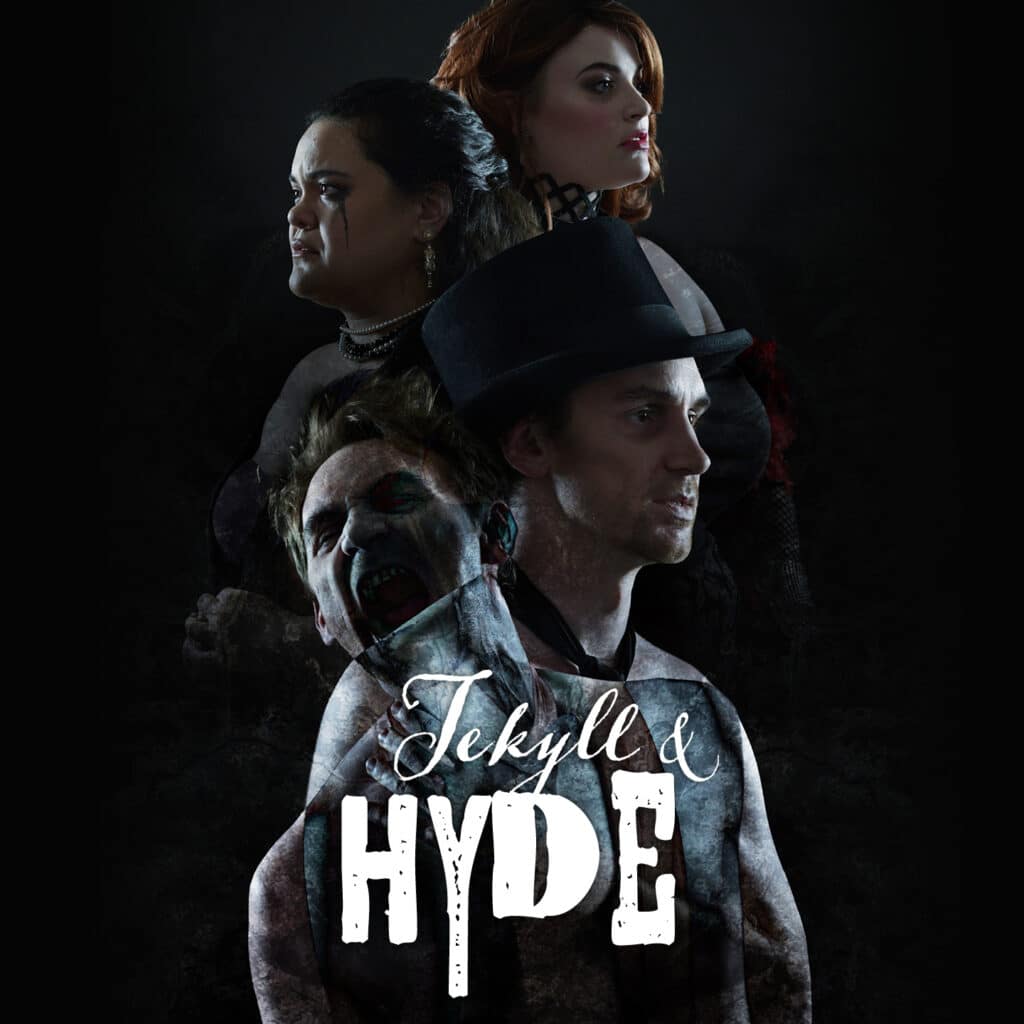
Broadway In Chicago announced today that tickets for Kokandy Productions’ critically acclaimed, multi-award-winning revival of JEKYLL & HYDE will go on sale…
Set in a debt collection call center, Do You Feel Anger? captures how a toxic workplace manifests itself in today’s…
The Broadway musical - Disney's The Little Mermaid - will hit the Uptown Music Theater stage this summer in Deerfield,…
Collaboraction Theatre Company’s new House of Belonging is now fully activated in the Kimball Arts Center, 1757 N. Kimball Ave…
Babes With Blades Theatre Company's (BWBTC) 2026 season opens with a world premiere, yo ho., by playwright SMJ, directed by…
Goodman Theatre’s Iceboy! arrives as a gleefully off the rails musical that blends Broadway glamour, Neanderthal chaos, and theatrical myth…
What’s on the minds of Chicago’s youth?Find out when Collaboraction Theatre’s 2026 The Light Youth Ensemble brings their talent, fused…
Is there anything more alluring than a summer night in Chicago? The lakefront beaches, the meandering pathways, the festivals and…
TimeLine Theatre announces cast & production team for world premiere THE BIRTH OF THE PILL
Nothing Without a Company presents The Trouble With My Hair: Coloring, Cutting, and Coming into Who I Am - Five Performances across Chicago, August 21st-30th
Theater Wit presents the Chicago premiere of Adolescent Salvation, August 14-October 3
Harris Theater Presents return of Chicago Black Dance Legacy Project, Aug. 28
Does your theatre company want to connect with Buzz Center Stage or would you like to reach out and say "hello"? Message us through facebook or shoot us an email at This email address is being protected from spambots. You need JavaScript enabled to view it..
*This disclaimer informs readers that the views, thoughts, and opinions expressed in the text belong solely to the author, and not necessarily to Buzz Center Stage. Buzz Center Stage is a non-profit, volunteer-based platform that enables, and encourages, staff members to post their own honest thoughts on a particular production.