
Displaying items by tag: classic
Kokandy Productions’ Jekyll & Hyde: A Fearless Reworking Elevated
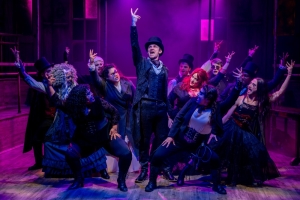
Kokandy Productions’ Jekyll & Hyde, now presented by Broadway In Chicago at the Broadway Playhouse, arrives with the momentum of a bona fide Chicago phenomenon. After its run at Chopin Theatre was extended again and again - an almost unheard of feat for an intimate, homegrown musical - the show has now been picked up for a full commercial engagement, marking a major leap for the company and a testament to the production’s electric word of mouth. It is worth noting just how rare this is: Broadway In Chicago almost never transfers storefront productions, making this pickup one of the most significant Chicago theatre success stories in recent memory. Conceived for the stage by Steve Cuden and Frank Wildhorn, this staging proves how a storefront success can scale beautifully without losing its bite.
This reimagined take on The Strange Case of Dr. Jekyll and Mr. Hyde, drawn from Robert Louis Stevenson’s classic story, uses Leslie Bricusse’s book and lyrics to follow Dr. Jekyll, a brilliant yet splintering scientist whose compassion fuels his most dangerous ideas. He turns to self‑improvement experiments - attempting to isolate and remove the darker impulses that plague human behavior. Only after the town council votes down his proposal to move forward does Jekyll test his theories on himself, unleashing a violent alter ego - Mr. Hyde - that refuses to stay contained and seeks revenge on those who dismissed his ideas as reckless.
While Jekyll’s experiments drive the plot, the production grounds his unraveling in two sharply drawn relationships: his earnest, hopeful romance with Emma and his complicated, magnetic connection with Lucy. Emma represents the future he’s desperate to protect, while Lucy embodies the vulnerability and desire he can’t fully control. Together, they give the story its emotional spine, showing how Jekyll’s transformation fractures not just his identity, but the lives of the women who care for him.
Kokandy dives into the duality with sharp humor, vivid theatricality, and a pulsing score that turns the transformation into both a spectacle and a psychological spiral. As Jekyll’s world cracks - friends endangered, morality blurred, identity slipping - the production keeps the tension taut, balancing gothic thrills with a surprisingly human core.
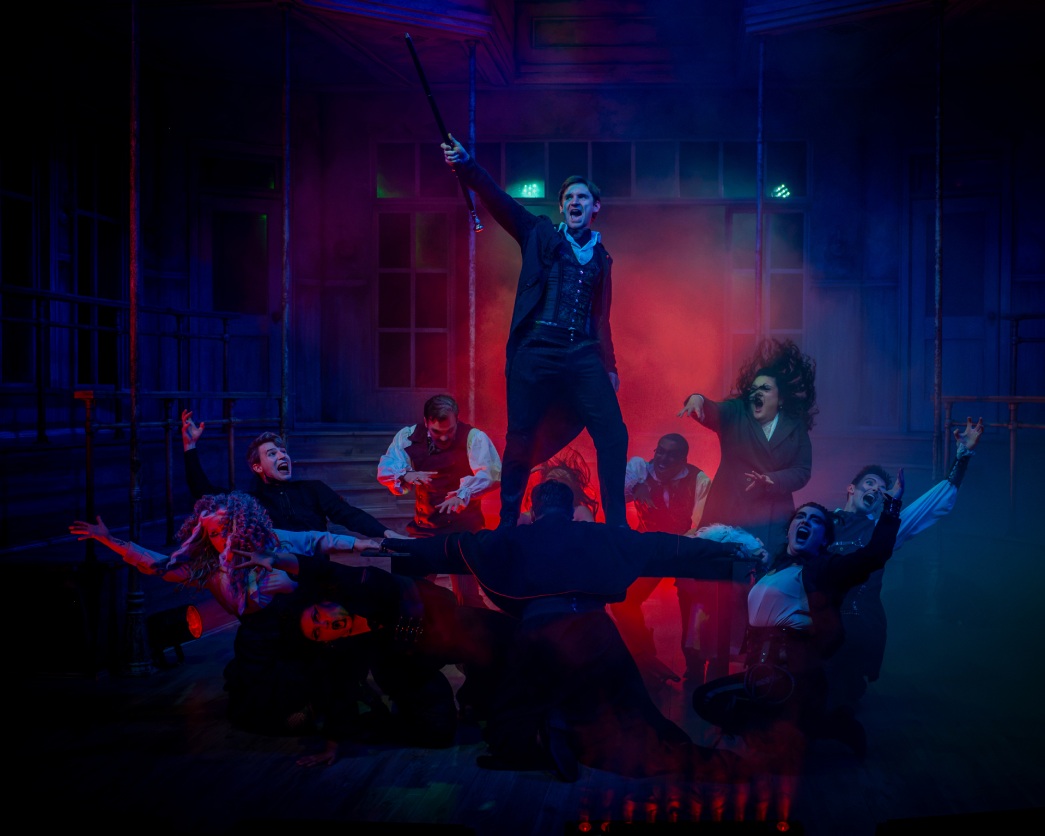
(center) David Moreland and the cast of Kokandy Productions’ production of Jekyll & Hyde.
What makes this staging stand out is its inventiveness: clever staging, bold physicality, and a cast that commits fully to the grotesque and the gorgeous – and, wow, can they sing. It’s no surprise audiences kept returning at Chopin, pushing the run far past its original closing date. That groundswell of audience demand is precisely what caught Broadway In Chicago’s attention - a level of traction strong enough to propel a storefront musical into a full commercial engagement. Seeing it now elevated to the Broadway Playhouse feels like the rare occasion when Chicago’s storefront originality gets the larger platform it deserves. In fact, upon entering, guests are handed stickers to mark how many times they’ve seen the show. Whether it’s their first visit or their seventh - the highest number I spotted - theatergoers wear it proudly, a small but telling sign of the cult‑like enthusiasm surrounding this production.
Directed by Producing Artistic Director Derek Van Barham, this production thrives on a razor‑sharp sense of style and drive. Van Barham shapes Jekyll & Hyde with the confidence of someone who knows exactly how to blend horror and heart into one seamless theatrical rhythm. A kinetic drive and deft wit run through the score thanks to Nick Sula’s music direction, ensuring crisp transitions and character‑focused vocal work. With a rare 15‑piece live orchestra on stage, the production’s musical power hits with a fullness and immediacy that elevates every passage. Brenda Didier’s choreography is the secret weapon — precise, playful, and radiating personality, it turns the show’s physicality into storytelling and amplifies the divide at the center of Jekyll’s collapse.
Kokandy’s ensemble fires on all cylinders, creating a production that feels both wickedly fun and sharply realized. David Moreland anchors the show with a riveting, shape‑shifting performance as Dr. Henry Jekyll and Mr. Edward Hyde, his vocal work and physical transformations giving the story its ferocious pulse. Moreland delivers a performance of remarkable physical and emotional intensity, one that stands out among the strongest I’ve seen. With visceral depth and vocal heat, Ava Lane Stovall shapes Lucy Harris into a woman suspended between danger and desire, her performance threading vulnerability through every moment of volatility. She makes Lucy’s internal tug of war feel immediate, giving the role a current that’s both seductive and unsettling. Meanwhile, Emily McCormick’s Emma Carew delivers a beautifully grounded counterbalance, her warm, expressive songs reinforcing the production’s moral center and offering the steadiness Jekyll’s world so desperately lacks.
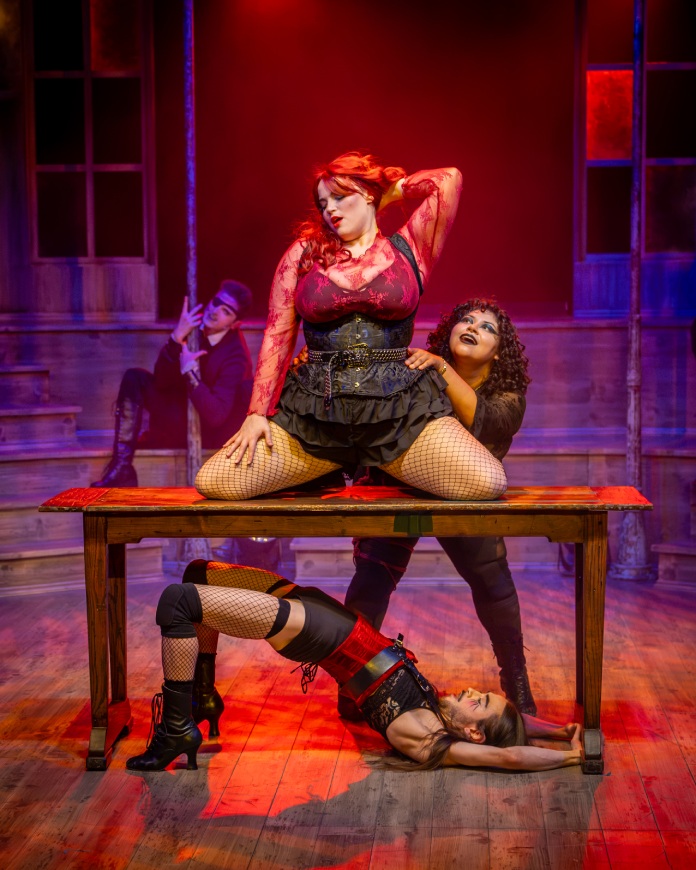
(center) Ava Lane Stovall with (left to right) Quinn Kelch and Ismael Garcia and (below) Quinn Simmons in Kokandy Productions’ production of Jekyll & Hyde.
As Simon Stride and Spider, Quinn Kech moves effortlessly between clipped propriety and feral swagger, pairing sharp character work with vocals that cut cleanly through the score. A steady moral throughline comes through in Kevin Webb’s Gabriel John Utterson, his warm baritone and grounded presence giving the story its emotional ballast. Nathan Calaranan brings a dignified, resonant authority to Sir Danvers Carew, shaping each turn with clarity and restraint. Around them, the ensemble meets the material with full‑throated commitment - singing with power, acting with specificity, and charging every scene with the kind of collective intensity that makes this production feel larger than its footprint. Led by Jeff Award winners Moreland, Stovall, and McCormick, the ensemble’s collective impact makes this Dr. Jekyll & Mr. Hyde feel vividly, thrillingly alive. The extended applause throughout the night were frequent and fully deserved.
The reimagined score is one of the production’s greatest triumphs, built on Frank Wildhorn’s music, yet reshaped into something leaner, sharper, and far more theatrical. Kim Scharnberg’s orchestrations give the music its dark, muscular edge, while Jason Howland’s arrangements sharpen its modern undercurrent. The orchestrations feel slyly contemporary and richly atmospheric, giving the story a sonic identity that matches Kokandy’s confident staging. Sula ensures every number lands with intention, whether it’s a brooding solo that tightens like a vice or an explosive ensemble sequence that floods the stage with adrenaline. And the vocal performances? They’re extraordinary – out of this world, presented with a clarity and force that elevate every musical moment.
The set evokes the grit and pressure of 1880s London without ever changing, a circular playing space with elevated risers that let the cast surround the action and heighten every moment of tension. Scenic designer Sotirios Livaditis, U.S.A., builds a world that’s intentionally fixed yet remarkably flexible, giving the ensemble multiple levels and angles to push the story forward. G. “Max” Maxin IV’s lighting and Matt Reich’s sound design sharpen that sense of immersion, shaping mood, focus, and dramatic impact from scene to scene. This talented design team gives us a unified environment that feels alive in its stillness - a single space that transforms through performance rather than mechanics.
Jekyll & Hyde comes highly recommended, not only for its inventive reworking but for the sheer theatrical command Kokandy brings to the Broadway Playhouse stage. Presented by Broadway In Chicago, the production (already extended) runs through November 8, 2026 at the Broadway Playhouse at Water Tower Place, with a runtime of 2 hours and 35 minutes including an intermission. It’s a bold, stylish, and wildly entertaining take on a classic tale - one that proves Kokandy’s storefront artistry can thrive beautifully on a commercial stage. I walked away from this production genuinely amazed, struck by how fully Kokandy has transformed a familiar title into something fresh, fearless, and alive. It’s a milestone not just for Kokandy, but for Chicago theatre itself - a reminder that the city’s most daring work can rise all the way to the downtown marquee.
Bernstein’s Score Burns Bright in Music Theater Works’ West Side Story
Some musicals carry such cultural weight that every new production feels like a referendum on how well a company can honor the original while making it feel alive again. West Side Story is one of those titles - a towering achievement in American musical theatre, a work whose emotional force and artistic innovation have endured for generations. Music Theater Works has now taken on this iconic musical at the North Shore Center for the Performing Arts in Skokie, and the result is a vibrant, beautifully staged production that captures both the drive and the aching humanity at the heart of the piece.
West Side Story is a modern retelling of Shakespeare’s Romeo and Juliet, but instead of two feuding families, it confronts the racial and cultural fault lines running through 1950s New York City. The Jets, a group of white American teenagers clinging to their sense of territory, clash with the Sharks, a Puerto Rican gang fighting for dignity, safety, and the right to belong in a city that continually pushes them to the margins. Their conflict is not just about turf; it is fueled by fear, resentment, and the prejudice that shapes how each group sees the other. When Tony, a former Jet trying to build a life beyond the violence, meets Maria, the sister of Sharks leader Bernardo, their connection is immediate and transformative. What begins as a spark of hope quickly becomes a dangerous love story unfolding against a backdrop of cultural tension, territorial pride, and escalating hostility.
As the feud intensifies, the young couple’s attempts to carve out a future together collide with the realities of their world. The rumble between the Jets and Sharks sets off a tragic chain of events, leaving Tony and Maria grasping for peace in a city determined to deny it. The musical’s final moments - heartbreaking, inevitable, and deeply human - underscore the cost of hatred and the fragile possibility of reconciliation.
The production also underscores one of the musical’s most enduring truths: that the idealism Tony and Maria cling to is constantly at war with the harsher realities shaping their world.
The creative pedigree behind West Side Story remains one of the most extraordinary collaborations in theatre history. Leonard Bernstein’s sweeping, genre‑blending score, Stephen Sondheim’s razor‑sharp lyrics, Arthur Laurents’ emotionally charged book, and Jerome Robbins’ groundbreaking choreography combine to create a work that is as musically thrilling as it is dramatically devastating. Bernstein’s score - among the most challenging he ever composed and one he found deeply artistically satisfying - remains one of his most defining artistic accomplishments. It is a piece that demands precision, passion, and a deep understanding of its themes, and Music Theater Works rises to that challenge with clarity and heart.
The company’s production is superbly realized, delivering crisp choreography, rich orchestral color, and performances that honor the emotional stakes of the story. It is a staging that respects the legacy of West Side Story while making the experience feel immediate and alive for today’s audiences.
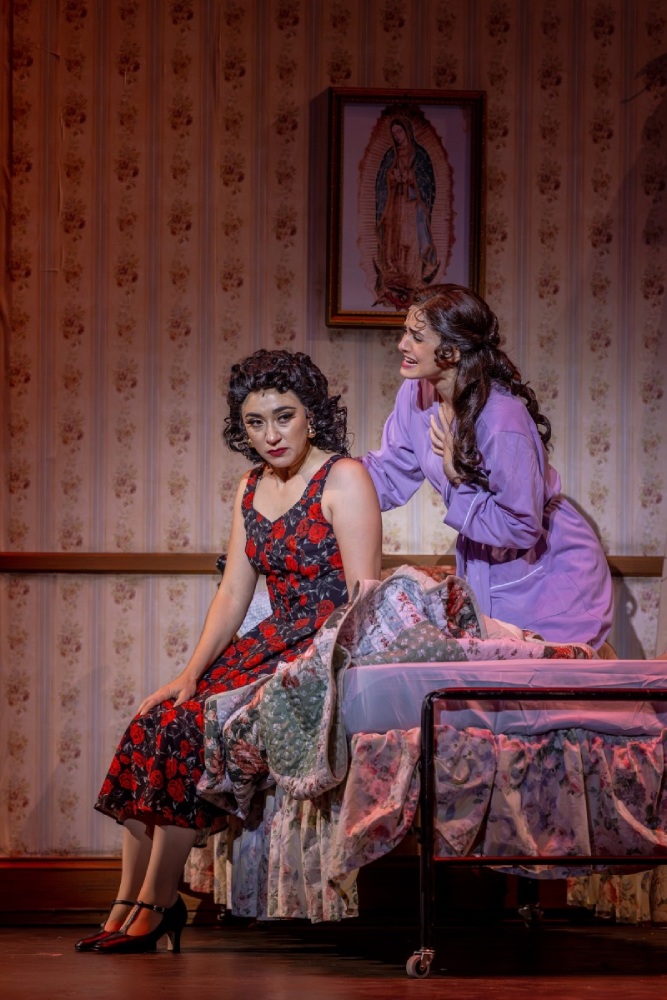
(L to R) Pauleth Jauregui as Anita and Isabella Ruano as Maria in WEST SIDE STORY from Music Theater Works.
The cast is terrific, but it is Isabella Ruano as Maria and Pauleth Jauregui as Anita who anchor the production, grounding it with performances that feel both lived‑in and emotionally urgent. Ruano’s Maria is luminous from her first entrance, her voice soaring through “Tonight” with a clearness and warmth that make the character’s hope feel newly electric. Jauregui matches her beat for beat, delivering an Anita rich with fire, humor, and heartbreak; her vibrant, sharply etched “America” is one of the evening’s defining moments. Together, they anchor the musical’s emotional arc with a confidence that elevates every scene they touch.
Offering a warm, earnest Tony is Luke Nowakowski, his ringing tenor in “Maria” and sincerity in “Something’s Coming” providing a steady, heartfelt counterpoint to the show’s rising tensions. Emmanuel Ramirez’s Bernardo contributes a controlled intensity, shaping the Sharks’ dynamic with quiet authority, while Kameron Rojas Schueneman’s Chino adds thoughtful, understated work that lands effectively in the final scenes.
Connor Ripperger brings a commanding presence as Riff, sharpening the Jets’ energy with restless physicality and crisp musical attack. His leadership in “Cool” gives the number a taut, combustible edge that sets the tone for the gang’s world.
If there’s one aspect that doesn’t land quite as strongly in this otherwise beautifully executed production, it’s the chemistry between Tony and Maria. While both Nowakowski and Ruano act with sincerity and sing with impressive range, clarity, and confidence, their scenes together occasionally feel more musically aligned than emotionally connected. The relationship lands, but at times you want a deeper spark between them - a stronger sense of shared urgency to match the vocal strength they each bring individually. And because this performance comes so early in the run, it’s easy to imagine that their connection will deepen as the actors settle further into each other’s rhythms.
That note aside, the principal cast delivers a production driven by strong voices and sharply drawn character work, with Ruano and Jauregui leading the charge.
The wider ensemble gives the production its pulse, moving with a clarity and drive that continually pushes the story forward, and Eric Desnoyers brings a welcome touch of humor as Officer Krupke, landing sharp comedic beats that lighten the show’s more chaotic moments. But above all, it is the wide-ranging, contemporary ballet-infused dance sequences that catch fire - those large, kinetic passages where movement becomes the show’s primary language. Much of the choreography folds fighting into dance, turning confrontation into something almost balletic: graceful, sculpted, and charged with tension. The company navigates these moments with remarkable control, letting the beauty of the movement coexist with the danger underneath.
In these sequences, the ensemble moves with a shared purpose, letting the choreography shape the conflict and momentum without overstating it. Their control and cohesion give the dance its impact, turning each major passage into a clear highlight that quietly but confidently lifts the production.
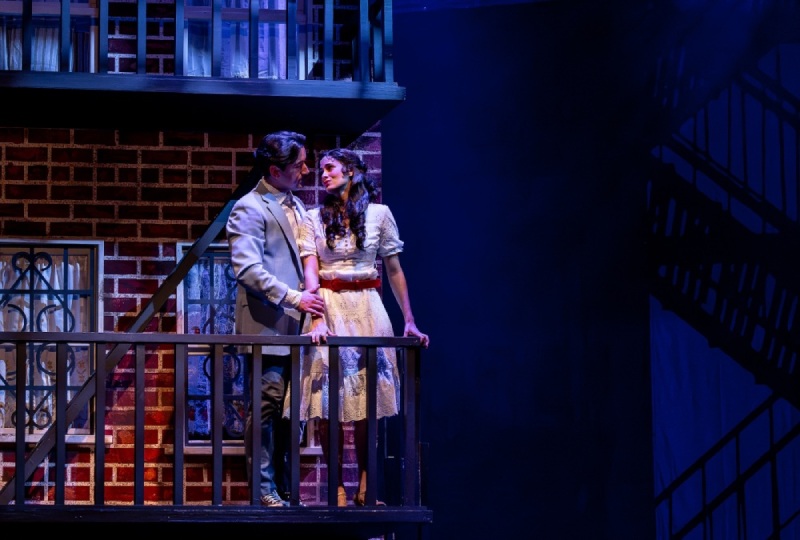
(L to R) Luke Nowakowski and Isabella Ruano in WEST SIDE STORY from Music Theater Works at North Shore Center for the Performing Arts.
Though the stage musical has always kept its original song order - and I understand the desire to preserve that structure - I’ve long hoped to see a production take a cue from the film in one particular moment. In the movie, “America” becomes a spirited debate between the Shark men and women, with Bernardo and Anita sparring over their hopes and frustrations about life in the United States. That dynamic not only brings Bernardo further into focus and deepens his relationship with Anita, it also gives the number a fuller, more energized sweep by letting a larger group of dancers drive its rhythm. The stage version’s women‑only arrangement works, but the film’s version has always struck me as the more dramatically rich and character‑revealing choice.
Beyond the choreography, the production’s artistic leadership is equally strong. The creative team brings seamless cohesion to this production. Director Sasha Gerritson guides the story with clarity and emotional focus, while co-choreographers Clayton Cross and Isa Ramirez deliver movement that honors the show’s iconic style with a fresh, contemporary lift. Linda Madonia’s musical direction keeps Bernstein’s score warm, tight, and expressive, supported by Justin Kono’s precise, sensitive conducting. The orchestra plays Bernstein’s score with crisp articulation and a full, glowing sound, letting the music’s rhythmic bite and lyrical sweep land with real impact. David Serrano’s Spanish translation adds welcome authenticity, with Spanish subtitles projected overhead during musical numbers that make the language accessible to both native speakers and those following along. The production’s most charged moments are shaped with care and impact through intimacy and violence choreography crafted by Nick Sandys.Director Sasha Gerritson guides the story with clarity and emotional focus, while co-choreographers Clayton Cross and Isa Ramirez deliver movement that honors the show’s iconic style with a fresh, contemporary lift. Linda Madonia’s musical direction keeps Bernstein’s score warm, tight, and expressive, supported by Justin Kono’s precise, sensitive conducting. The orchestra plays Bernstein’s score with crisp articulation and a full, glowing sound, letting the music’s rhythmic bite and lyrical sweep land with real impact. David Serrano’s Spanish translation adds welcome authenticity, with Spanish subtitles projected overhead during musical numbers that make the language accessible to both native speakers and those following along. The production’s most charged moments are shaped with care and impact through intimacy and violence choreography crafted by Nick Sandys.
Visually, the production is exceptionally well crafted. Bob Knuth’s scenic design and Cecilia Chan’s props work ground the story firmly in its era, giving the stage a lived-in authenticity that supports the drama without overwhelming it. The printed scenic drops hanging above and along the sides and rear of the stage - with their black windows, fire escapes, and bold red backgrounds - add a distinctive graphic layer, subtly echoing the stark lines and verticality of the 1961 movie poster designed by Joe Caroff. It is a smart visual nod that connects the production to its cinematic legacy without feeling derivative, instead offering a familiar, poster-like clarity that frames the action with understated style.
Bob Kuhn’s costumes and Kristen Brinati’s wardrobe leadership capture the period with clean, thoughtful detail, while Alice Salazar and Melanie Saso’s hair, wig, and makeup design add the finishing touches that make the Jets and Sharks feel fully appreciated. Andrew Meyers’ lighting brings sharp contrast and emotional texture to the stage, and Stephanie Farina’s sound design keeps the vocals and orchestra balanced and clear. This talented team builds an environment that feels true to the time, the place, and the heartbeat of West Side Story.
Taken together, these elements give the production a unity that extends well beyond its individual performances. The design work, staging choices, and musical precision all reinforce one another, creating a West Side Story that feels both faithful to its roots and freshly energized for a new audience. Taken together, these elements give the production a unity that extends well beyond its individual performances. The design work, staging choices, and musical precision all reinforce one another, creating a West Side Story that feels both faithful to its roots and freshly energized for a new audience. It’s a staging that understands the show’s emotional architecture and honors it with care. A staging this confident proves just how alive West Side Story can still feel.
Music Theater Works brings all of this together in a final product that feels both classic and newly urgent. Their West Side Story is a richly performed, thoughtfully designed, and confidently led production that honors the legacy of this landmark musical while giving it the vitality it deserves. Audiences can experience this outstanding staging August 13–30, 2026, and full details - including tickets - are available at www.musictheaterworks.com.
Recommended.
Metropolis’ Wizard of Oz Rekindles Pure Childhood Wonder
Metropolis Performing Arts Centre’s new staging of The Wizard of Oz sends audiences down the yellow brick road with a production that balances classic nostalgia with a warm, community centered spirit. Before the story unfolds, it’s worth remembering the legacy behind it: L. Frank Baum’s 1900 novel first introduced readers to Dorothy and the fantastical land of Oz, but it was the landmark 1939 MGM film that transformed the tale into a cultural touchstone. Judy Garland’s performance, the Technicolor world, and the Oscar winning score cemented the story’s place in American imagination. The film’s success inspired decades of stage adaptations, culminating in the Royal Shakespeare Company’s 1987 musical version by John Kane, which became the foundation for most modern theatrical productions, including Metropolis’ interpretation.
Under Tor Campbell’s direction and choreography, the familiar tale unfolds with clear narrative focus: Dorothy Gale’s unexpected journey from Kansas to the magical land of Oz, where she meets the Tin Man, Scarecrow, and Cowardly Lion and joins them on a quest to reach the Emerald City and seek help from the great and powerful Wizard of Oz. Along the way, the group navigates enchanted forests, poppy fields, and the looming threat of the Wicked Witch, discovering courage, heart, and the strength of friendship as their path winds toward home.
This stage version also introduces several comedic moments you won’t find in the classic film, a choice that gives the production a fresh, playful spirit. Campbell sprinkles in light audience interaction, small winks to the crowd, and character specific jokes that open up the world of Oz in ways only live theatre can. These additions never undermine the story’s sincerity; instead, they create a sense of shared fun between the performers and the audience, reminding viewers that Oz is not just magical - it’s delightfully unpredictable when experienced onstage.
While the larger roles across the cast are played with skill and presence, three performers emerge as the evening’s defining performances: Nora Wragg’s Dorothy, Jake Elkins’ Cowardly Lion, and Genevieve Thiers’s Wicked Witch. Wragg stands at the heart of the evening, offering a Dorothy shaped by sincerity, emotional clarity, and a vocal warmth and control that give her songs an effortless lift. Her speaking voice is particularly striking, at times uncannily reminiscent of Judy Garland, deepening the role’s authenticity without ever tipping into imitation. Elkins bursts onto the stage with bold humor and irresistible personality, turning the Cowardly Lion into a crowd-pleasing force of nature. Thiers brings commanding theatrical bite to the Wicked Witch, leaning into the character’s menace with sharp timing, confident presence, and seasoned comedic instincts that add a delicious flair to her villainy.
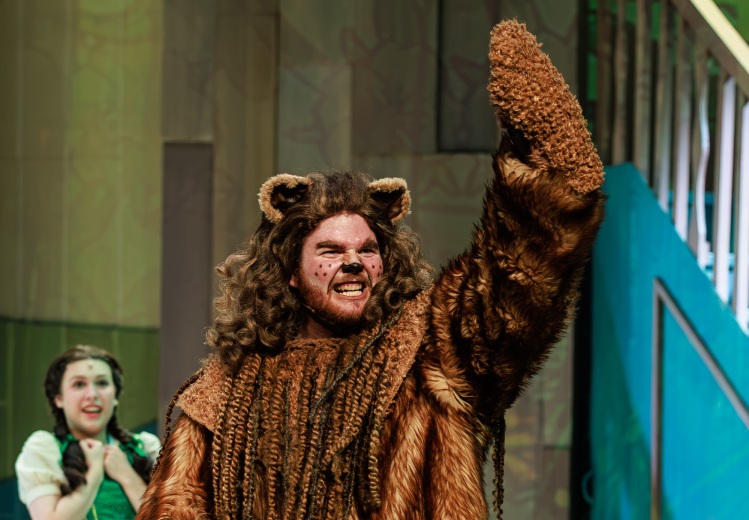
Nora Wragg as Dorothy Gale and Jake Elkins as Cowardly Lion in THe Wizard of Oz at Metropolis Performing Arts Centre. Nora Wragg as Dorothy Gale and Jake Elkins as Cowardly Lion. Photography by Jennifer Heim.
Around them, Gabriel Fries provides steady, grounded work in his dual roles as the Wizard and Professor Marvel, shifting between Marvel’s warmth and the Wizard’s bluster with ease. David Omari’s Tin Man adds soft vulnerability that complements the ensemble, and Corey Barlow, stepping in for Nolan F. Robinson II as the Scarecrow in the performance I saw, brings relaxed, playful movement and an easy charm that keeps the character loose-limbed throughout. Adding to the production’s appeal is Caliban Marie Spence, a real-life little dog who plays Toto and becomes an instant audience favorite with every appearance, a lovely touch of authenticity that heightens the show’s sense of wonder. Caliban was trained for the role by Danielle Spence, who is delightful onstage as Glinda the Good Witch, exuding kindness, confidence, and the gentle assurance that everything will be all right. Together, these performances guide the audience through Oz with warmth, personality, and a touch of real magic.
Two of the strongest forces pulling Dorothy toward home are the deep bond she shares with her dog Toto - whom she feels is her only true companion on the lonely Kansas farm and is threatened with being destroyed by the stern, vindictive neighbor Miss Gulch, who later appears in Oz as the Wicked Witch of the West - and the steadfast love of her hardworking Aunt Em, who has stepped into the role left vacant by Dorothy’s late mother. The Wizard of Oz is also one of the few films of its era to make a four‑legged companion feel like a true co‑star, and it’s always striking to me how naturally the actors work with Toto and how deeply he’s woven into Dorothy’s emotional world. In many ways, the entire story is set in motion because of him: Dorothy finding her inner self by rescuing Toto.
Metropolis’ use of a lightly trained dog reinforces that bond beautifully, grounding the story in something real and tender. Seeing an actual dog onstage makes the audience instantly understand Dorothy’s desperation to protect him from Miss Gulch’s threat, and her fierce devotion to Toto remains a surprisingly radical idea for a story of its time. He’s the companion who saved her from loneliness, and her determination to keep him safe becomes the catalyst for her entire journey - willing to leave everything she knows behind if it means preserving the friendship, love, and life of her dog.
As of 2026, animal abuse - especially toward domesticated dogs and cats - remains a heartbreaking problem around the world. That’s part of why stories like The Wizard of Oz still matter: they show a young person treating her pet with genuine love, loyalty, and protection, reminding audiences how powerful and important that bond can be.
Shifting back to the company, Metropolis Performing Arts Centre’s Youth Ensemble brings the Munchkins to life with fun energy and crisp character work- along with other roles played, enriching every scene they step into. Their musical numbers sparkle with bright, unified group vocals, and their choreography is impressively sharp, full of buoyant movement and clean formations that give Munchkinland its joyful pulse.
The production’s technical storytelling reaches an early high point with the tornado sequence, staged with impressive clarity and imagination. Dancers swirl across the stage, waving billowing grey scrims that evoke churning storm clouds, while Forrest Gregor’s sound design layers convincing wind roars, rattling impacts, and atmospheric rumble. Tony Churchill’s projection design adds spiraling debris and sweeping gusts that intensify the chaos, culminating in a striking moment when Alyssa Mohn’s scenic design reveals Dorothy’s house splitting cleanly in half. Once Dorothy lands in Oz, the creative team transforms the stage from plain Kansas farmland into a magical, richly colored world through Sierra Walker’s strategic lighting, Churchill’s dynamic projections, and Theresa Ham’s vivid, whimsical costumes. The projections also allow both the Wizard and the Wicked Witch to appear larger than life, giving their scenes an added theatrical punch that heightens the story’s sense of wonder.
All of this visual ingenuity supports the larger emotional themes at the center of Metropolis’ interpretation. As director Tor Campbell notes, “At its heart, The Wizard of Oz is not about a destination. It is about resilience,” and “After every storm comes the possibility of a rainbow,” a pair of reflections that beautifully frame the production’s spirit and its enduring message.
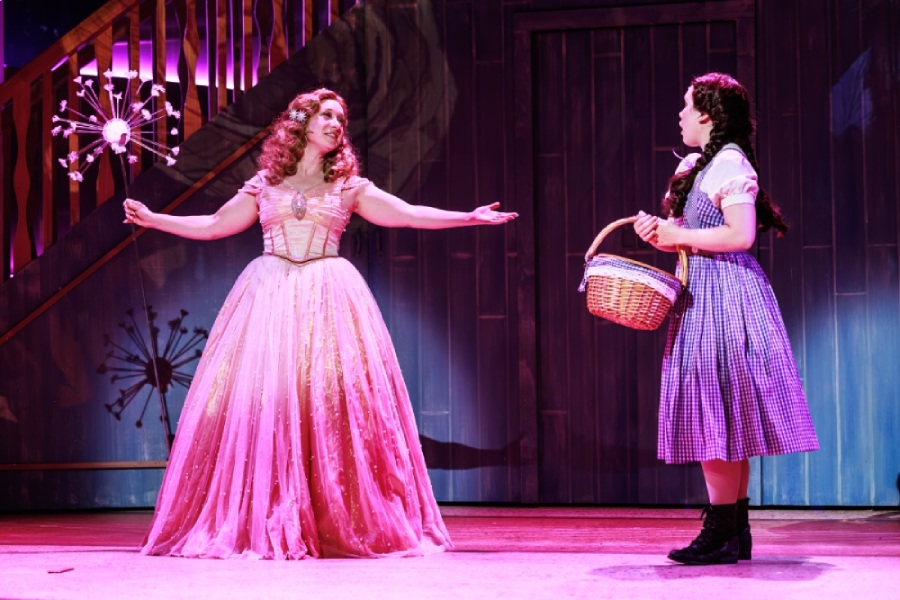
Danielle Spence as Glinda and Nora Wragg as Dorothy Gale in The Wizard of Oz at Metropolis Performing Arts Centre.
One of the joys of this production is hearing the show’s classic songs delivered with such affection. Metropolis keeps all the musical touchstones that audiences expect, from the sweeping simplicity of “Somewhere Over the Rainbow” (beautifully sung by Wragg) to the buoyant charm of “We’re Off to See the Wizard,” “If I Only Had a Brain,” “If I Only Had a Heart,” and “If I Only Had the Nerve.” The familiar melodies land with an easy warmth, and Sharon Mason’s music direction ensures each number feels both lovingly preserved and freshly energized. Whether you grew up with the film or are discovering Oz for the first time, the score remains one of the production’s most delightful anchors, offering moments of nostalgia, humor, and pure musical joy.
This staging taps into the broad, welcoming appeal that has kept The Wizard of Oz alive for generations, offering a family friendly experience that works just as well for first‑timers as it does for lifelong fans. Young audiences get the magic, color, and adventure, while adults appreciate the faithful storytelling, classic score, and standout character work. With its beloved characters, recognizable songs, and heartfelt performances, Metropolis’ production celebrates courage, companionship, and the reminder that home is never as far away as it seems. Most of all, it rekindles that unmistakable childhood wonder the story has carried for decades, letting audiences feel like kids again as they’re swept up in bright colors, familiar melodies, and the simple joy of watching Dorothy and her friends discover who they are. It’s the kind of show where adults smile at memories they haven’t visited in years and younger audiences fall in love with Oz for the first time, a blend of fun, heart, and theatrical playfulness that sends you out of the theatre lighter than you walked in.
What also stands out in revisiting The Wizard of Oz is how much strength Baum gave his female characters, especially considering the story’s early 20th century origins. Dorothy may be young, but she drives the narrative through her choices, her compassion, and her determination to return home. Glinda’s calm authority and the Wicked Witch’s fierce, commanding presence form a striking contrast - two powerful women shaping the world of Oz in very different ways. Even within a fantasy framework, there’s symbolic weight in that dynamic: Dorothy’s journey becomes a quiet assertion of agency, resilience, and moral clarity at a time when female protagonists were rarely allowed such depth. Metropolis’ production highlights that legacy, reminding audiences that beneath the magic and spectacle lies a story where women hold the narrative’s heart, its danger, and its wisdom.
Audience logistics at Metropolis are refreshingly convenient. A free, multi-level parking garage sits just around the corner, making arrival and departure remarkably easy, and the surrounding streets offer a wide range of restaurants only steps from the theatre for pre- or post-show dining. Inside, the venue’s cozy seating creates an intimate viewing experience, and while the concessions stand offers a fine assortment of drinks, snack options are extremely limited. Patrons may want to bring their own munchies for intermission, though outside food is prohibited inside the theatre, making a quick bite before or after the show the most practical choice.
With the practicalities so thoughtfully handled, what remains is the simple joy of being swept into a world where imagination leads the way. In the end, this Wizard of Oz proves that the road to Emerald City is still paved with imagination, heart, and just enough whimsy to make you believe in magic all over again.
Recommended.
For tickets and more show info, visit https://www.metropolisarts.com/.



Latest Articles
-
 “A Strange Loop” Lets the Intrusive Thoughts Win at Raven Theatre in partnership with About Face Theatre
Written by John AccroccoA musical, but it’s just the voices in your head. Sounds just crazy enough to win the 2020 Pulitzer for Drama. “A Strange Loop” by Michael R. Jackson finally makes its Chicago premiere at Raven Theatre in a co-production with…
“A Strange Loop” Lets the Intrusive Thoughts Win at Raven Theatre in partnership with About Face Theatre
Written by John AccroccoA musical, but it’s just the voices in your head. Sounds just crazy enough to win the 2020 Pulitzer for Drama. “A Strange Loop” by Michael R. Jackson finally makes its Chicago premiere at Raven Theatre in a co-production with… -
 Announcing Goodman's 22nd New Stages 2026 Festival Line-Up
Written by Buzz Center StageFrom a "Kung Fu rom-com" to a witchy new musical, The Goodman's popular New Stages Festival in its 22nd year continues to offer a first glimpse at the latest works by a handful of the hottest contemporary playwrights. This year's four-play…
Announcing Goodman's 22nd New Stages 2026 Festival Line-Up
Written by Buzz Center StageFrom a "Kung Fu rom-com" to a witchy new musical, The Goodman's popular New Stages Festival in its 22nd year continues to offer a first glimpse at the latest works by a handful of the hottest contemporary playwrights. This year's four-play… -
Chicago Danztheatre Ensemble Announces 2026-2027 Season
Written by Buzz Center StageChicago Danztheatre Ensemble (CDE) is pleased to announce its 2026 - 2027 season. CDE will open this artistic season with Copestic Vibrations: A Music Festival, Friday, Nov. 13 and Saturday, Nov. 14, followed by a fully staged production of For…
-
Eos Theatre Company Announces Second Production with The Thin Place
Written by Buzz Center StageEos Theatre Company is pleased to announce their second production with Lucas Hnath's horror play The Thin Place, directed by JC Clementz (Steppenwolf's Director of Casting and Artistic Operations), playing February 5 - 28, 2027 in Bramble Arts Loft's Beatrice Theater, 5545 N…
Does your theatre company want to connect with Buzz Center Stage or would you like to reach out and say "hello"? Message us through facebook or shoot us an email at This email address is being protected from spambots. You need JavaScript enabled to view it..
*This disclaimer informs readers that the views, thoughts, and opinions expressed in the text belong solely to the author, and not necessarily to Buzz Center Stage. Buzz Center Stage is a non-profit, volunteer-based platform that enables, and encourages, staff members to post their own honest thoughts on a particular production.